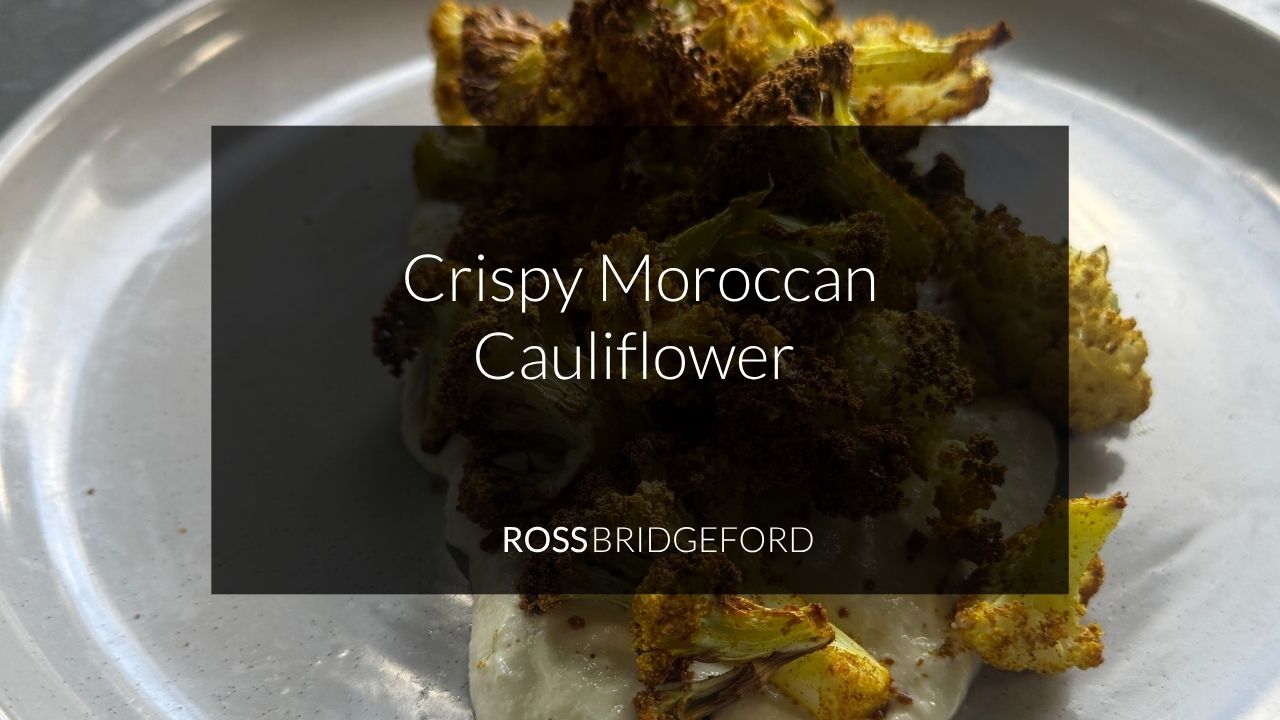
Crispy Moroccan Cauliflower: Alkaline Snack Recipe
The cauliflower gets beautifully crisp around the edges, with cumin, coriander, turmeric, smoked paprika and just a little cinnamon giving it that warm Moroccan flavour, and then underneath you have this creamy tahini and avocado sauce that takes about two minutes to make.
It is simple, filling and absolutely loaded with the good stuff.
From an alkaline point of view, cauliflower gives us a fantastic mineral-rich vegetable base, while the avocado, tahini, lemon, garlic, spices and extra virgin olive oil add healthy fats and a whole range of protective plant compounds.
Why I Love This Moroccan Cauliflower Recipe
Cauliflower is one of my favourite cruciferous vegetables, sitting in the same family as broccoli, cabbage, kale and Brussels sprouts.
These vegetables contain a group of plant compounds called glucosinolates, which can be converted into isothiocyanates such as sulforaphane when the plant cells are chopped or chewed.
Sulforaphane has become one of the most researched compounds in cruciferous vegetables because of its antioxidant and anti-inflammatory activity, and there is growing research around the wider role of glucosinolates and isothiocyanates in supporting cellular protection and healthy inflammatory responses.
The important thing is that we don’t need to turn dinner into a chemistry experiment.
Eat plenty of cruciferous vegetables, prepare them in different ways, chew them properly, and make them taste good enough that you actually WANT to eat them regularly.
This recipe definitely ticks that last box.
The Alkaline Benefits
This is a very simple dish, but nutritionally there is quite a lot going on.
Cauliflower and Sulforaphane Precursors
Cauliflower belongs to the cruciferous family and contains glucosinolates, which are plant compounds that can be converted into biologically active isothiocyanates, including sulforaphane.
Sulforaphane has attracted a huge amount of research interest because of its potential antioxidant, anti-inflammatory and cellular-protective actions. Research also suggests that how cruciferous vegetables are chopped and cooked can influence glucosinolate retention and sulforaphane formation.
The practical takeaway for me is simply to include cruciferous vegetables regularly and not always cook them the same way.
Broccoli, cauliflower, cabbage, kale, Brussels sprouts and rocket are all brilliant foods to have appearing regularly throughout the week.
Antioxidant Support
There are several antioxidant-rich ingredients packed into this dish.
The cauliflower itself contains protective phytochemicals, while turmeric, cumin, coriander, smoked paprika, cinnamon, garlic, lemon and chilli all contribute different plant compounds.
This is something I talk about a lot with my Triple-A approach: we are not only looking at whether a food is alkaline-forming. We also want foods that are antioxidant-rich and anti-inflammatory wherever we can get them.
This recipe gives you all three.
Anti-Inflammatory Foods
Cruciferous vegetables and their glucosinolate-derived compounds have been studied extensively for their effects on inflammatory pathways and oxidative stress.
Then we are adding turmeric, extra virgin olive oil, avocado, tahini and garlic, which gives us another whole layer of healthy fats and plant compounds.
You do not need every meal to contain some exotic “superfood”. Very often it is combinations like this, simple whole foods with lots of vegetables, herbs, spices and healthy fats, that add up powerfully over time.
Alkaline and Mineral-Rich
Cauliflower, avocado, lemon, garlic, herbs and spices all fit beautifully into an alkaline-focused diet, giving you plenty of potassium, magnesium, fibre and phytonutrients without relying on heavily processed ingredients.
And because the cauliflower is the star of the plate rather than an afterthought sitting beside something else, you are getting a really substantial serve of vegetables in one meal.
That is exactly the sort of thing I want you doing more often.
A Quick Note on Cooking Cruciferous Vegetables
One interesting thing about cauliflower, broccoli and the other cruciferous vegetables is that preparation affects their beneficial compounds.
When you chop or chew cauliflower, you bring glucosinolates into contact with an enzyme called myrosinase, which helps create compounds such as sulforaphane. High heat can reduce some myrosinase activity, while boiling can also cause glucosinolates to leach into the cooking water.
This does not mean cooked cauliflower suddenly becomes unhealthy. Far from it.
It just means variety is useful.
Have some cruciferous vegetables raw, some lightly steamed, some roasted, some air fried, and keep rotating through different ones during the week.
That way you are getting the benefits without turning food into something you have to obsess over.
Make It Your Own
You can easily play around with this Moroccan spiced cauliflower depending on what you have.
Broccoli works brilliantly alongside the cauliflower, or you could do a mixture of both. You could add chickpeas to the dish for a more substantial meal, sprinkle over pumpkin seeds instead of pine nuts, or add fresh mint and coriander at the end.
And if you want more heat, be generous with the chilli.
The tahini avocado sauce is also worth remembering on its own because it works with roasted vegetables, salads, bowls, falafel, quinoa and all sorts of other meals.
For me though, the crispy spiced cauliflower piled over that cool, creamy tahini avocado base is pretty hard to beat.

Recipe below: Crispy Moroccan Cauliflower with Creamy Tahini Avocado Sauce
Here’s to your health,
Ross