Immune-Boosting Vegetable Soup
Full of immune-supporting vegetables, this soup gives your body an abundance of the nutrients it needs.
Tastes: rich and comforting, a smooth blend of cooked and raw veg with tomato, ginger, turmeric and fresh herbs.
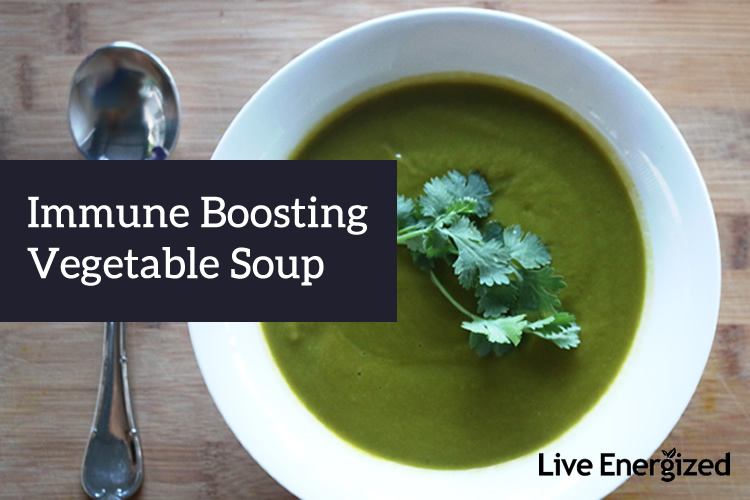
Nourish your immune system
Eating the right foods is vitally important for our health and energy. We need to give our body all the tools and nutrients it needs – and when we do, we thrive.
Your immune system doesn’t just stop outsiders getting in. It has three lines of defence – keeping invaders out, defending against pathogens that get through, and making antibodies to specific ones – and it’s important in allergies and auto-immune conditions too. It’s a complex system, and we need to nourish it and look after it.
Why you’ll love it
- Vitamin C: about twice your daily needs.
- About 19 g fibre and 16 g plant protein a bowl.
- Half cooked, half raw – blended together.
- Vitamins A and K: well over three-quarters and over twice your daily needs.
Good for
Vitamin C, copper, vitamin A and folate contribute to the normal function of the immune system.
Vitamin C, copper, manganese and vitamin E contribute to the protection of cells from oxidative stress. It also contains plant compounds with antioxidant activity, including lutein, beta-carotene and lycopene.
Folate, vitamin B6, pantothenic acid and iron contribute to the reduction of tiredness and fatigue.
Protein contributes to the maintenance of muscle mass, and potassium, magnesium and calcium contribute to normal muscle function.
Vitamin K, manganese, magnesium and phosphorus contribute to the maintenance of normal bones.
Vitamin A, riboflavin and zinc contribute to the maintenance of normal vision. It also contains lutein and zeaxanthin, the carotenoids found in the macula of the eye.
Potassium contributes to the maintenance of normal blood pressure.
Tags use approved nutrient health-claim wording, for nutrients that give at least 10% of the Daily Value per bowl. Plant compounds like lutein have no Daily Value, so we only say they’re there.
Key nutrients per bowl
Contains: vitamin B6 (65%), potassium (47%), pantothenic acid (44%), thiamin (42%), iron (37%), magnesium (36%), vitamin E (35%), niacin (34%), riboflavin (31%), phosphorus (26%), zinc (22%), calcium (21%) and selenium (11%).
Plant compounds: lutein and zeaxanthin (about 3.8 mg), beta-carotene (about 7.7 mg), lycopene (about 15 mg), chlorophyll, quercetin from the onion, glucosinolates from the broccoli, cauliflower and cabbage, curcumin from the turmeric, gingerols from the ginger and sulphur compounds from the garlic.
% of US Daily Value for adults, per bowl (half the recipe). Estimated from USDA FoodData Central values for the ingredients as listed; cooking reduces some vitamins, so treat these as upper estimates. Uses crushed canned tomatoes, low-sodium stock, 1 tbsp coconut oil and ground turmeric values for fresh; excludes salt and pepper; anything over 100% shows as 100%+.
Immune-Boosting Vegetable Soup
Ingredients
Equipment
Method
- Gently fry the onion and garlic in the coconut oil. After 3 minutes, add the carrots, cauliflower, broccoli, cabbage, ginger and turmeric and cook for another 3 minutes.
- Add the stock and tomatoes and simmer for 20–25 minutes until the vegetables have softened a little.
- Meanwhile, roughly chop the raw ingredients and blend until smooth.
- When the soup has simmered, blend it in batches with the raw mixture until smooth.
- Season, and serve warm with a sprig of coriander or basil and a drizzle of olive or flax oil if you like.
Swaps
- Lighter: skip the chickpeas.
- Any greens work in the raw blend – kale or watercress are great.
- Make it creamy: blend in ½ avocado.
Storing it
Keeps in the fridge for 3 days and freezes well.
Good to know
- High in vitamin K. If you take warfarin or another blood thinner, keep your greens intake steady and talk to your doctor before eating more leafy greens than usual.
- Salt: canned tomatoes and chickpeas add up to about 690 mg sodium a bowl; choose no-added-salt cans if you can.
Try next
The Alkaline Life Club has everything in the Recipe Club, plus coaching, live Q&A and a community to keep you going.
See the Alkaline Life ClubSources
Nutrient values: USDA FoodData Central, SR Legacy (onion 170000, garlic 169230, carrots 170393, cauliflower 169986, broccoli 170379, cabbage 169975, crushed canned tomatoes 170501, ginger 169231, turmeric 172231, coconut oil 171412, cucumber 168409, tomatoes 170457, spinach 168462, basil 172232, coriander leaves 169997, chickpeas 173801). Plant compounds are named where the ingredient is a well-documented source; flavonoids follow the USDA Database for the Flavonoid Content of Selected Foods, Release 3.3. Daily Values: US Food and Drug Administration.