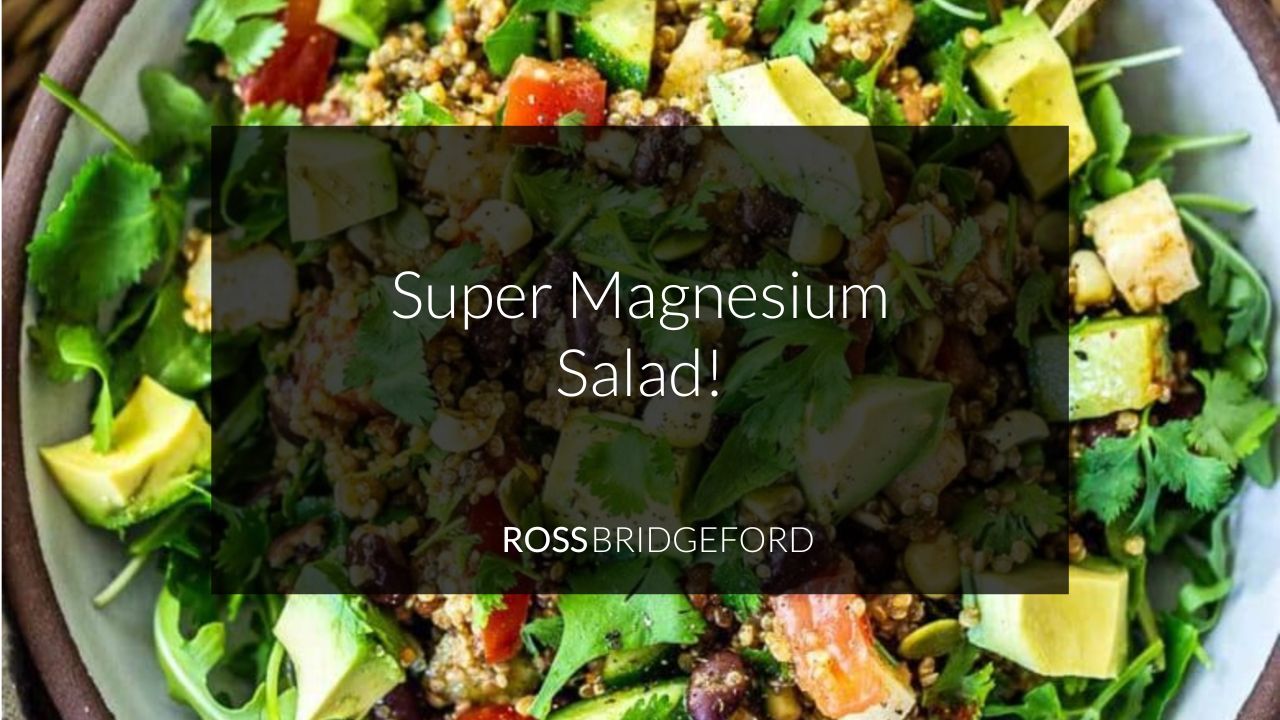
Magnesium-Boosting Super Salad
Being one of the most alkaline minerals, I have a soft spot for magnesium. This salad is built from some of the highest natural sources of it we know – about a full day’s magnesium in every bowl.
Tastes: fresh greens with creamy avocado, crunchy toasted seeds and nuts, and a lemony dressing.
Magnesium is CRITICAL
Not only is magnesium alkaline (and so adds to our alkaline buffering system), it is also perhaps the most essential of the essential minerals… and yet studies show that 60% or more of adults don’t get the recommended daily intake.
The good news is, when you are even just a little mindful of your diet (as you are!), you can easily get enough magnesium from food alone. And this salad is a great start.
Low magnesium has been linked with a higher risk of heart disease, stroke, type 2 diabetes and some cancers, so getting enough really matters.
Why you’ll love it
- About a full day’s magnesium in every bowl.
- Toasted pumpkin seeds and almonds for crunch.
- Filling: about 27 g of protein and 22 g of fibre per serve.
Good for
Copper, folate, vitamin A and vitamin C contribute to the normal function of the immune system.
Manganese, copper, vitamin E and vitamin C contribute to the protection of cells from oxidative stress. It also contains plant compounds with antioxidant activity, including lutein, beta-carotene and anthocyanins.
Folate, magnesium, riboflavin and iron contribute to the reduction of tiredness and fatigue.
Protein contributes to the maintenance of muscle mass, and magnesium, potassium and calcium contribute to normal muscle function.
Vitamin K, manganese, magnesium and phosphorus contribute to the maintenance of normal bones.
Vitamin A, riboflavin and zinc contribute to the maintenance of normal vision. It also contains lutein and zeaxanthin, the carotenoids found in the macula of the eye.
Potassium contributes to the maintenance of normal blood pressure.
Tags use approved nutrient health-claim wording, for nutrients that give at least 10% of the Daily Value per serve. Plant compounds like lutein have no Daily Value, so we only say they’re there.
Key nutrients per serve
Contains: vitamin E (85%), vitamin C (80%), riboflavin (59%), iron (57%), phosphorus (54%), thiamin (47%), zinc (47%), potassium (44%), vitamin B6 (42%), pantothenic acid (34%), niacin (29%), calcium (20%) and selenium (15%).
Plant compounds: lutein and zeaxanthin (about 23 mg), beta-carotene (about 9.3 mg), plant omega-3 ALA (about 0.5 g), chlorophyll, anthocyanins from the black beans, sulphur compounds from the garlic and citrus flavonoids from the lemon.
% of US Daily Value for adults, per serve (half the recipe). Estimated from USDA FoodData Central values for the ingredients as listed, so treat these as upper estimates. Dressing counted as 1 tbsp olive oil, 2 tbsp lemon juice and a pinch of garlic powder; anything over 100% shows as 100%+.
Magnesium-Boosting Super Salad
Ingredients
Equipment
Method
- Rinse and chop the spinach and Swiss chard if needed, and divide them between two large salad bowls.
- Divide the cooked quinoa evenly between the bowls.
- Rinse the black beans and add them equally to each salad.
- Toast the pumpkin seeds and almonds in a dry pan, let them cool, and scatter them over the salads.
- Add the cubed avocado, half to each salad.
- Whisk together the olive oil, lemon juice, garlic powder, salt and pepper, and drizzle over both salads.
- Toss each salad gently and serve straight away, or chill briefly in the fridge.
Swaps
- No Swiss chard? Use more spinach or kale.
- Nut-free? Use sunflower seeds instead of almonds.
- Any dressing you love works. I like olive oil, lemon, garlic, salt and pepper.
Storing it
Best eaten fresh. Dress it just before serving; undressed, it keeps in the fridge for a day.
Good to know
- High in vitamin K. If you take warfarin or another blood thinner, keep your greens intake steady and talk to your doctor before eating more leafy greens than usual.
- Spinach and chard are high in oxalates. If you’ve had kidney stones, check with your doctor first.
- Contains almonds. Swap them for sunflower seeds if you need it nut-free.
Try next
The Alkaline Life Club has everything in the Recipe Club, plus coaching, live Q&A and a community to keep you going.
See the Alkaline Life ClubSources
Nutrient values: USDA FoodData Central, SR Legacy (spinach 168462, Swiss chard 169991, quinoa (cooked) 168917, pumpkin seeds 170556, almonds 170567, black beans 173735, avocado 171705, olive oil 171413, lemon juice 167747, garlic powder 171325). Plant compounds are named where the ingredient is a well-documented source; flavonoids follow the USDA Database for the Flavonoid Content of Selected Foods, Release 3.3. Daily Values: US Food and Drug Administration. Magnesium intake: Workinger, Doyle and Bortz, “Challenges in the Diagnosis of Magnesium Status,” Nutrients 10 (2018): 1202.