Sweet Sugar Cravings Buster Juice
This recipe is a real winner because, well, it’s delicious first and foremost, but also because the kale, broccoli, spinach and parsley give you a great hit of alkaline minerals. It makes two glasses, each with almost a day’s vitamin C and about 4 g of natural sugar.
Tastes: green and fresh, with cucumber and celery doing the softening. A squeeze of lemon brightens it.
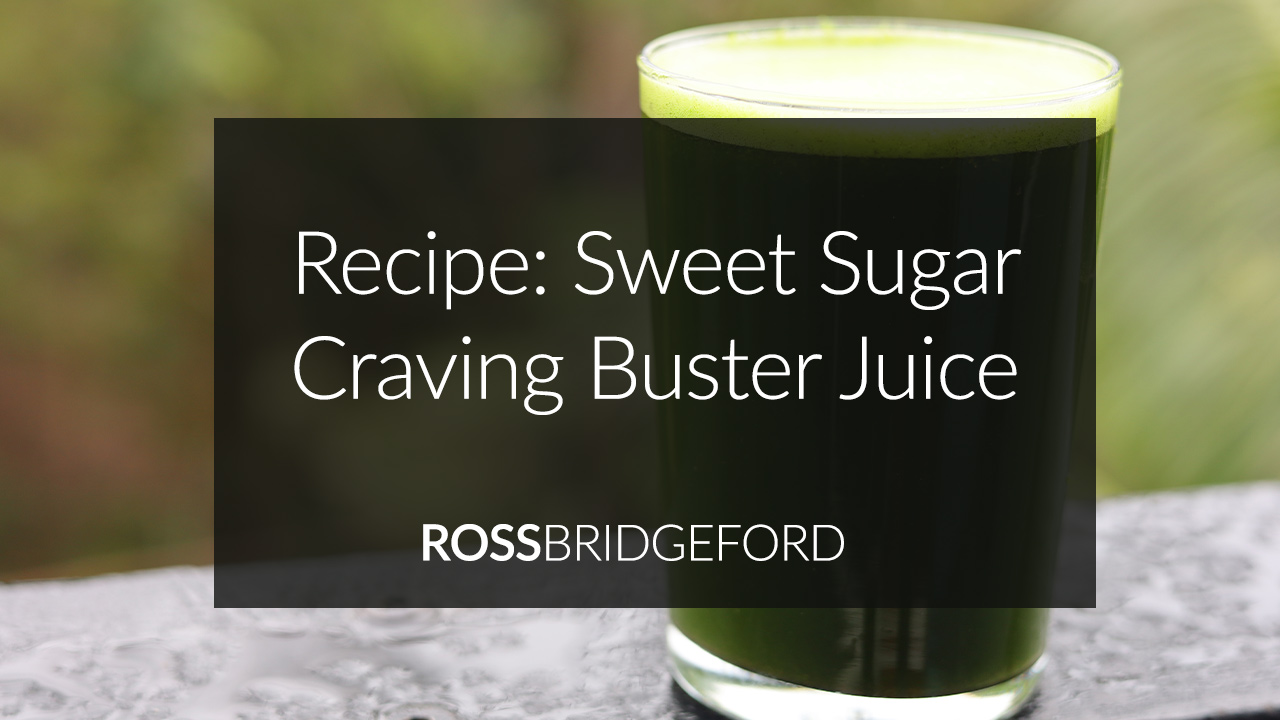
Delicious first and foremost
Alkaline foods are predominantly ‘alkaline’ because of the minerals they contain. Yep, they are high in alkaline minerals! And this recipe, with the kale, broccoli, spinach and parsley in particular, gives you a great hit of them.
It’s super alkaline, and delicious. And indeed – it’s my go-to when those cravings hit!
As I’ve talked about before, cravings for salt, sugar, bread or fatty foods can often be your body asking for a particular group of minerals. For sugar and sweet cravings, those minerals are magnesium, zinc and chromium, and the kale, broccoli, spinach and parsley in this juice can help you top them up.
Why you’ll love it
- Delicious first and foremost. Cucumber and celery keep it fresh, and a squeeze of lemon takes the edge off the green.
- A great hit of greens. Kale, broccoli, spinach and parsley in every glass.
- Light on sugar. About 4 g of natural sugar per glass.
- Make it once, have it twice. It keeps in the fridge for 36–48 hours.
Good for
Vitamin C, folate, vitamin A and copper contribute to the normal function of the immune system.
Vitamin C, manganese, riboflavin and copper contribute to the protection of cells from oxidative stress. It also contains plant compounds with antioxidant activity, including lutein, beta-carotene and apigenin.
Folate, riboflavin, pantothenic acid and vitamin B6 contribute to the reduction of tiredness and fatigue.
Vitamin K, manganese, magnesium and calcium contribute to the maintenance of normal bones.
Vitamin A and riboflavin contribute to the maintenance of normal vision. It also contains lutein and zeaxanthin, the carotenoids found in the macula of the eye.
Potassium contributes to the maintenance of normal blood pressure.
Tags use approved nutrient health-claim wording, for nutrients that give at least 10% of the Daily Value per glass. Plant compounds like lutein have no Daily Value, so we only say they’re there.
Key nutrients per glass
Contains: riboflavin (18%), pantothenic acid (18%), copper (16%), potassium (15%), vitamin B6 (14%), magnesium (14%), iron (12%), thiamin (11%) and calcium (11%).
Plant compounds: lutein and zeaxanthin (about 4.4 mg), beta-carotene (about 2.2 mg), chlorophyll, apigenin from the parsley and celery, quercetin and kaempferol from the kale and glucosinolates from the broccoli and kale.
% of US Daily Value for adults, per glass (half the recipe). Estimated from USDA FoodData Central values for the whole ingredients. Juicing leaves most of the fibre and some vitamins in the pulp, so treat these as upper estimates; anything over 100% shows as 100%+.
Sweet Sugar Cravings Buster Juice
Ingredients
Equipment
Method
- Simply juice all of the ingredients.
- Pour into two glasses and top up with water or coconut water to suit your taste preference.
- If you want to remove some of the ‘green’ flavour, add a squeeze of lemon juice to each glass too.
Notes
Swaps
- Coconut water instead of filtered water makes it a little sweeter.
- No broccoli? Use extra kale or spinach.
- Too green? Add a squeeze of lemon to each glass.
Storing it
This will keep in the fridge in an airtight container for 36–48 hours. Give it a shake before you drink it.
Good to know
- High in vitamin K. If you take warfarin or another blood thinner, keep your greens intake steady and talk to your doctor before eating more leafy greens than usual.
- Spinach and parsley contain oxalates. If you’ve had kidney stones, check with your doctor first.
Try next

The Alkaline Life Club has everything in the Recipe Club, plus coaching, live Q&A and a community to keep you going.
See the Alkaline Life ClubSources
Nutrient values: USDA FoodData Central, SR Legacy (spinach 168462, kale 168421, broccoli 170379, parsley 170416, cucumber 168409, celery 169988). Plant compounds are named where the ingredient is a well-documented source; flavonoids follow the USDA Database for the Flavonoid Content of Selected Foods, Release 3.3. Daily Values: US Food and Drug Administration.