Moroccan Roast Eggplant Stew
Perfect for a quick and easy (and alkaline) dinner: minimal preparation, so rich and flavourful, and made with everyday household ingredients.
Tastes: rich, smoky and warmly spiced, with roasted eggplant and fresh coriander.
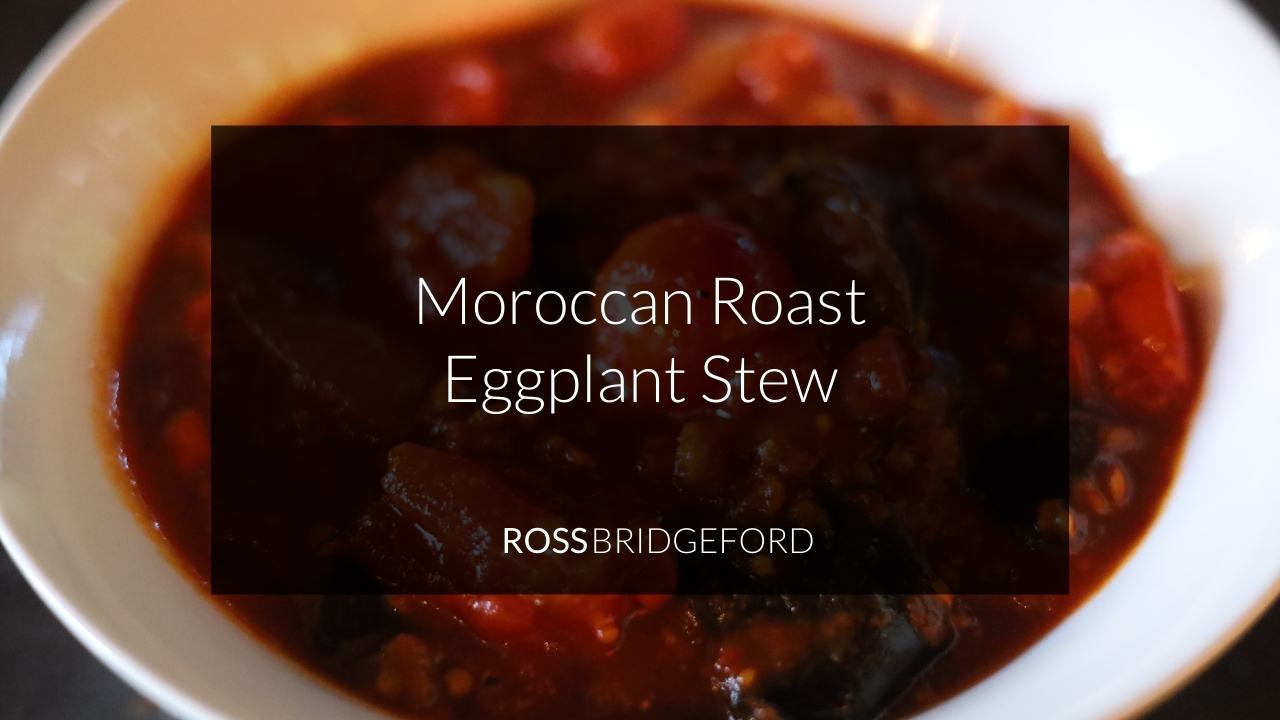
Rich, flavourful and family-friendly
The tomato, eggplant and coriander make it super-dense in alkaline minerals and antioxidants, and the garlic brings its immune-supporting, antiviral power.
Served with quinoa or rice, this is a fibre-rich, protein-rich meal that the whole family will love.
Why you’ll love it
- Fibre: about 19 g a serve from the chickpeas, quinoa and veg.
- Lycopene from all those roasted and tinned tomatoes.
- Manganese and copper: a full day’s worth per serve.
- Minimal prep. The oven does most of the work.
Good for
Copper, vitamin B6, folate and vitamin C contribute to the normal function of the immune system.
Manganese, copper, vitamin C and riboflavin contribute to the protection of cells from oxidative stress. It also contains plant compounds with antioxidant activity, including lutein, beta-carotene and lycopene.
Vitamin B6, folate, magnesium and riboflavin contribute to the reduction of tiredness and fatigue.
Protein contributes to the maintenance of muscle mass, and magnesium, potassium and calcium contribute to normal muscle function.
Manganese, magnesium, vitamin K and phosphorus contribute to the maintenance of normal bones.
Riboflavin, zinc and vitamin A contribute to the maintenance of normal vision.
Potassium contributes to the maintenance of normal blood pressure.
Tags use approved nutrient health-claim wording, for nutrients that give at least 10% of the Daily Value per serve. Plant compounds like lutein have no Daily Value, so we only say they’re there.
Key nutrients per serve
Contains: vitamin K (35%), thiamin (33%), potassium (33%), phosphorus (32%), riboflavin (31%), iron (31%), vitamin E (29%), niacin (28%), zinc (26%), pantothenic acid (22%), selenium (14%), vitamin A (13%) and calcium (11%).
Plant compounds: lutein and zeaxanthin (about 0.7 mg), beta-carotene (about 1.3 mg), lycopene (about 8.3 mg), chlorophyll, quercetin from the onion and sulphur compounds from the garlic.
% of US Daily Value for adults, per serve (half the recipe). Estimated from USDA FoodData Central values for the ingredients as listed; cooking reduces some vitamins, so treat these as upper estimates. Harissa spices use paprika, cumin and chilli powder values; anything over 100% shows as 100%+.
Moroccan Roast Eggplant Stew
Ingredients
Equipment
Method
- Preheat the oven to 200°C (400°F) with a large baking tray inside to heat up.
- While it heats, chop the eggplant, tomatoes and onion. Take out the hot tray, melt half the coconut oil on it, toss the vegetables to coat and roast for 35–40 minutes.
- Meanwhile, cook the quinoa. When the roasting is almost done, warm the rest of the coconut oil in a pan, add the garlic for 2–3 minutes, then the tinned tomatoes.
- Stir in the harissa spices, then add the roasted vegetables to the pan. Stir it all through and simmer for 3–4 minutes.
- Transfer to a blender or food processor and roughly blend, leaving it a little chunky.
- Return to the pan, add the chickpeas and warm through for another 2–3 minutes.
- Stir through most of the coriander and serve with the quinoa, with the rest of the coriander on top.
Notes
Swaps
- Rice instead of quinoa works well.
- No harissa spice mix? Use 1 tsp smoked paprika, ½ tsp cumin and a pinch of chilli.
- Smoother: blend it fully instead of leaving it chunky.
Storing it
Keeps in the fridge for 3–4 days and freezes well.
Try next


The Alkaline Life Club has everything in the Recipe Club, plus coaching, live Q&A and a community to keep you going.
See the Alkaline Life ClubSources
Nutrient values: USDA FoodData Central, SR Legacy (coconut oil 171412, eggplant 169228, tomatoes 170457, onion 170000, garlic 169230, paprika 171329, cumin 170923, chilli powder 171319, crushed tomatoes 170501, chickpeas 173801, coriander leaves 169997, quinoa (cooked) 168917). Plant compounds are named where the ingredient is a well-documented source; flavonoids follow the USDA Database for the Flavonoid Content of Selected Foods, Release 3.3. Daily Values: US Food and Drug Administration.