Cucumber & Watercress Soup
Cucumber, peppery watercress, spinach and spring onion blended with stock. Cool and refreshing in summer, or gently warmed when it’s chilly.
Tastes: fresh, cool and peppery from the watercress.
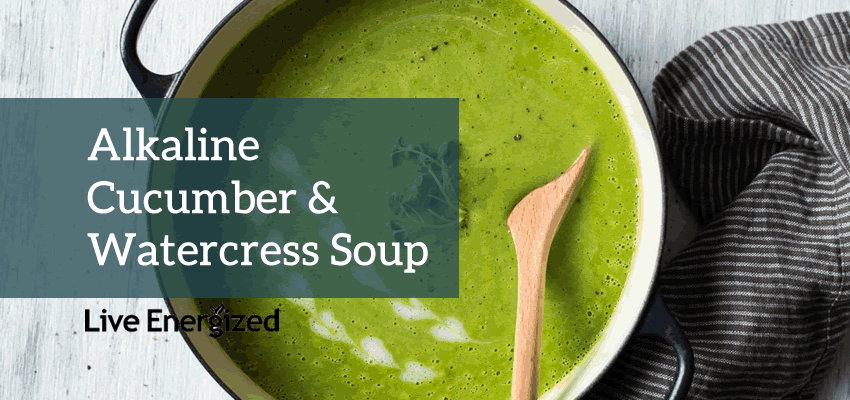
The perfect soup all year round
This is the perfect soup all year round. When it’s hot-hot-hot, it’s cooling and refreshing; when it’s cool, you can warm it slightly to make a warming, soothing soup. Either way it takes minutes to make.
Cucumber is a hit – it features on my Seven Most Alkaline Foods list.
And as for WATERCRESS: in a study ranking ‘powerhouse’ fruits and vegetables by their nutrient density, watercress came TOP, with a perfect score! I think that’s enough said! Let’s get into the soup.
Why you’ll love it
- Vitamin K: three days’ worth a bowl.
- Vitamin C: over half your daily needs.
- Watercress: the top-ranked powerhouse vegetable.
- Hot or cold, ready in minutes.
Good for
Vitamin C, vitamin A, copper and folate contribute to the normal function of the immune system.
Vitamin C, copper, manganese and riboflavin contribute to the protection of cells from oxidative stress. It also contains plant compounds with antioxidant activity, including lutein, beta-carotene and quercetin.
Folate, pantothenic acid, riboflavin and magnesium contribute to the reduction of tiredness and fatigue.
Vitamin K, manganese, magnesium and calcium contribute to the maintenance of normal bones.
Vitamin A and riboflavin contribute to the maintenance of normal vision. It also contains lutein and zeaxanthin, the carotenoids found in the macula of the eye.
Potassium contributes to the maintenance of normal blood pressure.
Tags use approved nutrient health-claim wording, for nutrients that give at least 10% of the Daily Value per bowl. Plant compounds like lutein have no Daily Value, so we only say they’re there.
Key nutrients per bowl
Contains: potassium (18%), folate (17%), thiamin (17%), pantothenic acid (16%), riboflavin (15%), magnesium (14%), calcium (13%) and vitamin B6 (12%).
Plant compounds: lutein and zeaxanthin (about 7.1 mg), beta-carotene (about 2.7 mg), chlorophyll, quercetin from the onion and glucosinolates from the watercress.
% of US Daily Value for adults, per bowl (half the recipe). Estimated from USDA FoodData Central values for the ingredients as listed, so treat these as upper estimates. Uses typical low-sodium stock values; excludes salt and pepper; anything over 100% shows as 100%+.
Cucumber & Watercress Soup
Ingredients
Equipment
Method
- Chop everything and put it in the blender.
- Make the stock by dissolving the cube or bouillon in a little hot water, then topping up with cold water (or keep it warm for the warm version).
- Add the stock to the blender and blend it all up! Season to taste.
Swaps
- Thicker: add ½ avocado, or use 750 ml stock.
- More peppery: keep adding more and more watercress if you like!
- Minty: a few mint leaves are lovely in the cold version.
Storing it
Best fresh, but keeps in a sealed jar in the fridge for a day.
Good to know
- High in vitamin K. If you take warfarin or another blood thinner, keep your greens intake steady and talk to your doctor before eating more leafy greens than usual.
Ross’s tip
This soup is SUCH a delicious – and fast – recipe that everyone always loves!
Try next
The Alkaline Life Club has everything in the Recipe Club, plus coaching, live Q&A and a community to keep you going.
See the Alkaline Life ClubSources
Nutrient values: USDA FoodData Central, SR Legacy (spring onions 170005, cucumber 168409, watercress 170068, baby spinach 168462). Plant compounds are named where the ingredient is a well-documented source; flavonoids follow the USDA Database for the Flavonoid Content of Selected Foods, Release 3.3. Daily Values: US Food and Drug Administration. Powerhouse vegetables: Di Noia, “Defining powerhouse fruits and vegetables: a nutrient density approach,” Preventing Chronic Disease 11 (2014): 130390.