Turmeric & Coconut Rice with Cacao & Seeds
A simple, quick, one-pot sweet recipe that’s anti-inflammatory, brain-boosting, alkaline and DELICIOUS.
Tastes: creamy, gently sweet coconut rice with warming spices, crunchy seeds and juicy blueberries.
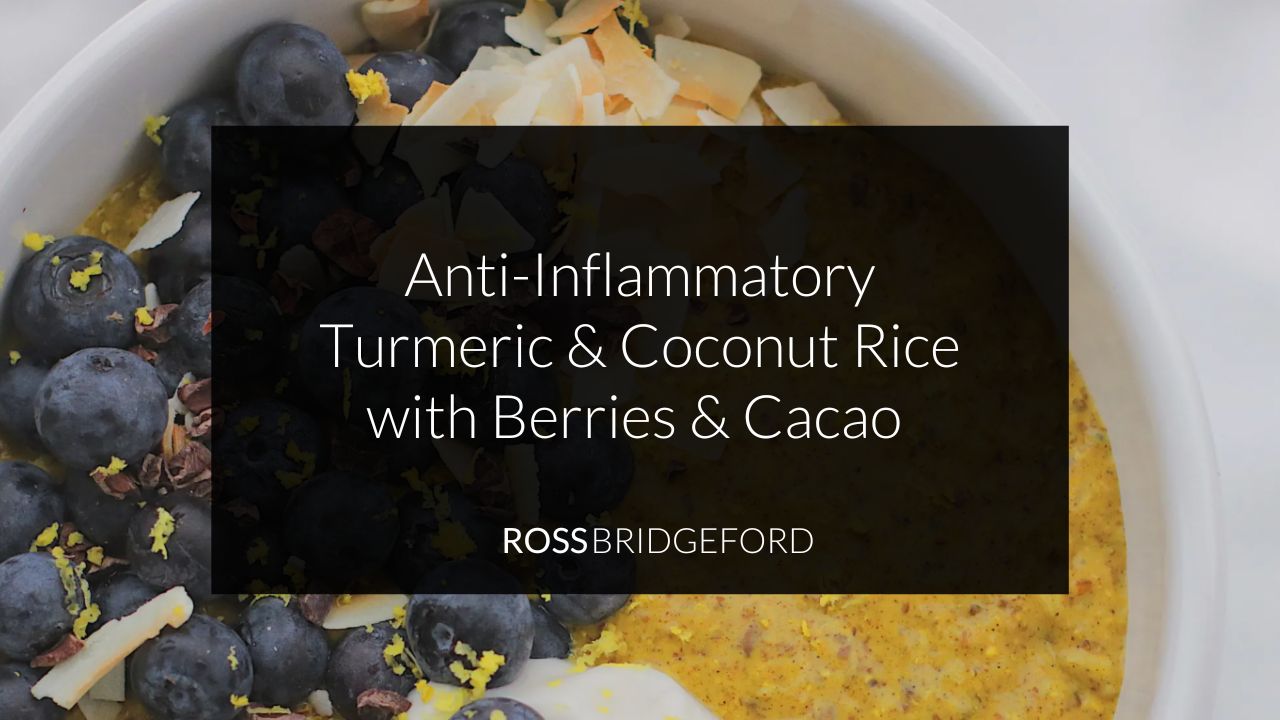
Dessert or breakfast
This is one of our newest hits in our house, and we’re all hooked. It takes just 35–40 minutes, it’s very simple, and there’s only one pot to wash up. What more could you want in a sweet treat of a recipe?
Turmeric is a natural anti-inflammatory that may help support brain function and digestion, and it may even help protect against some cancers (it’s why I eat it daily). Coconut brings healthy fats; cacao brings antioxidants and magnesium and may help support healthy blood pressure; ginger is a well-known anti-inflammatory that can help with nausea and indigestion; and blueberries – BRAINberries – are rich in anthocyanins that may help support brain function.
Why you’ll love it
- One pot, and very little effort.
- Anti-inflammatory spices: turmeric, ginger and cinnamon.
- Crunchy seeds and cacao nibs for texture, minerals and antioxidants.
- Dessert or breakfast. Serve it warm with blueberries and coconut yoghurt.
Good for
Copper, iron, selenium and zinc contribute to the normal function of the immune system.
Manganese, copper, selenium and zinc contribute to the protection of cells from oxidative stress. It also contains plant compounds with antioxidant activity, including anthocyanins, curcumin and gingerols.
Iron, magnesium, niacin and pantothenic acid contribute to the reduction of tiredness and fatigue.
Manganese, magnesium, phosphorus and zinc contribute to the maintenance of normal bones.
Zinc and riboflavin contribute to the maintenance of normal vision.
Potassium contributes to the maintenance of normal blood pressure.
Tags use approved nutrient health-claim wording, for nutrients that give at least 10% of the Daily Value per serve. Plant compounds like these have no Daily Value, so we only say they’re there.
Key nutrients per serve
Contains: selenium (25%), zinc (20%), vitamin B6 (18%), pantothenic acid (18%), thiamin (17%), riboflavin (15%), vitamin E (13%), potassium (10%) and calcium (6%).
Plant compounds: anthocyanins from the berries, curcumin from the turmeric, gingerols from the ginger and flavanols from the cacao.
% of US Daily Value for adults, per serve (half the recipe). Estimated from USDA FoodData Central values for the ingredients as listed; cooking reduces some vitamins, so treat these as upper estimates. Excludes coconut yoghurt to serve. Cacao nibs use USDA unsweetened baking chocolate values; anything over 100% shows as 100%+.
Turmeric & Coconut Rice with Cacao & Seeds
Ingredients
Equipment
Method
- Pour the coconut milk into a saucepan with 125 ml of filtered water, stir in the rice and bring to the boil.
- Once boiling, reduce to a simmer and cook gently for 20 minutes.
- Stir through the rice malt syrup, turmeric, ginger, cinnamon, salt and coconut oil.
- Simmer for another couple of minutes, or until the rice is tender, then add the cacao nibs, seeds and coconut flakes.
- Serve into bowls and top with the blueberries and coconut yoghurt.
Swaps
- Brown rice works too – add 10–15 minutes and a splash more water.
- Less sweet: halve the rice malt syrup and let the blueberries do the work.
- Any seeds you have on hand.
Storing it
Best warm and fresh. Leftovers keep in the fridge for 2 days; loosen with a splash of coconut milk when you reheat it.
Try next
The Alkaline Life Club has everything in the Recipe Club, plus coaching, live Q&A and a community to keep you going.
See the Alkaline Life ClubSources
Nutrient values: USDA FoodData Central, SR Legacy (coconut milk 170173, white rice 169756, malt syrup 169660, cinnamon 171320, turmeric 172231, ginger 169231, salt 173468, coconut oil 171412, cacao nibs (unsweetened baking chocolate) 167568, sunflower seeds 170562, pumpkin seeds 170556, desiccated coconut 170170, blueberries 173950). Plant compounds are named where the ingredient is a well-documented source; flavonoids follow the USDA Database for the Flavonoid Content of Selected Foods, Release 3.3. Daily Values: US Food and Drug Administration.