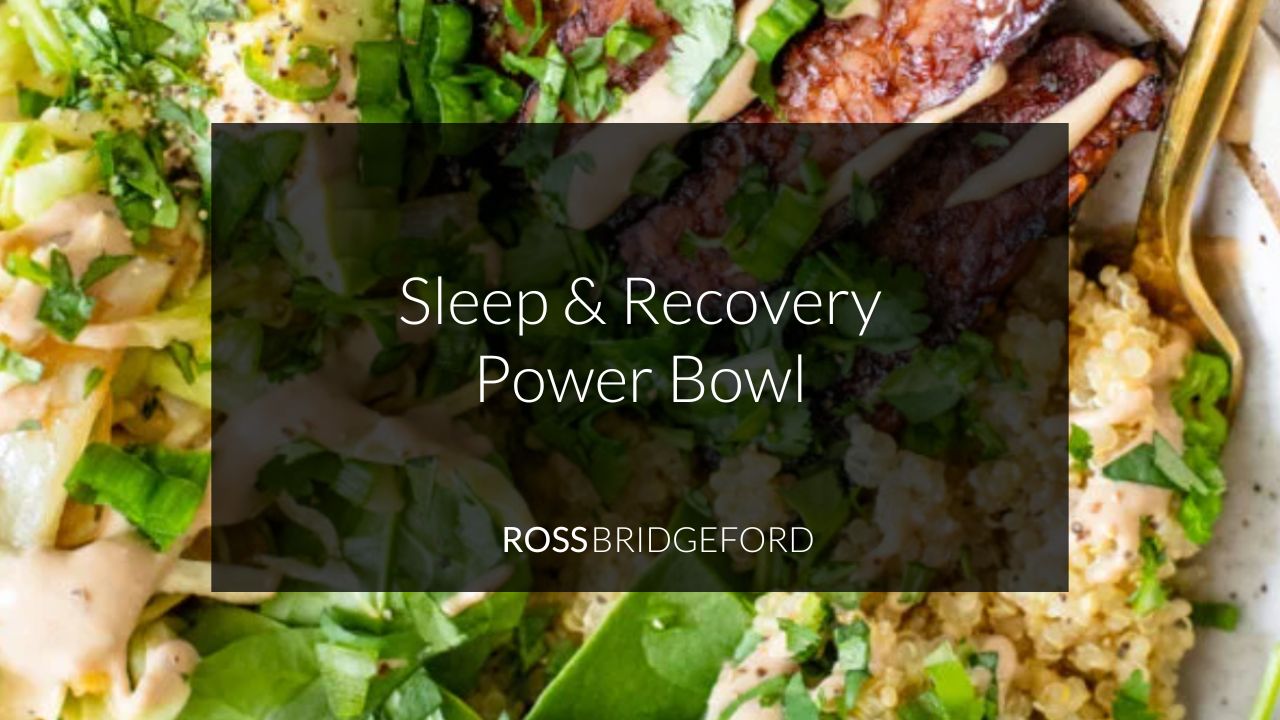
Tempeh Quinoa Sleep & Recovery Bowl
A simple, deeply nourishing bowl designed to support your gut, help reduce inflammation and help you get a more restful night’s sleep.
Tastes: golden, nutty tempeh with fluffy quinoa, creamy avocado and a warm hint of turmeric.
The gut–sleep connection
There’s a powerful connection between gut health and sleep. When your gut is inflamed or out of balance, it can disrupt melatonin production, raise cortisol at night and interfere with the messengers that regulate your sleep-wake cycle.
Tempeh is a fantastic plant-based protein that’s rich in tryptophan, which your body uses to make serotonin and then melatonin, the hormone that regulates your sleep cycle. Because it’s fermented, it may help support healthy gut bacteria too. The magnesium-rich greens and pumpkin seeds may help calm cortisol so your nervous system can wind down, and the fibre feeds the beneficial bacteria in your gut.
Why you’ll love it
- About 23 g plant protein a bowl, from the tempeh and quinoa.
- Tryptophan-rich tempeh, the building block for serotonin and melatonin.
- Magnesium: about 40% of your daily needs, from the greens and pumpkin seeds.
- Ready in about 25 minutes, with one pan and one pot.
Good for
Copper, folate, zinc and iron contribute to the normal function of the immune system.
Manganese, copper, riboflavin and zinc contribute to the protection of cells from oxidative stress. It also contains plant compounds with antioxidant activity, including lutein, beta-carotene and curcumin.
Magnesium, riboflavin, folate and iron contribute to the reduction of tiredness and fatigue.
Protein contributes to the maintenance of muscle mass, and magnesium, potassium and calcium contribute to normal muscle function.
Vitamin K, manganese, magnesium and phosphorus contribute to the maintenance of normal bones.
Riboflavin, zinc and vitamin A contribute to the maintenance of normal vision. It also contains lutein and zeaxanthin, the carotenoids found in the macula of the eye.
Potassium contributes to the maintenance of normal blood pressure.
Tags use approved nutrient health-claim wording, for nutrients that give at least 10% of the Daily Value per bowl. Plant compounds like lutein have no Daily Value, so we only say they’re there.
Key nutrients per bowl
Contains: phosphorus (33%), zinc (26%), iron (25%), vitamin B6 (24%), pantothenic acid (22%), niacin (21%), vitamin E (21%), potassium (19%), thiamin (17%), vitamin A (16%), vitamin C (15%) and calcium (10%).
Plant compounds: lutein and zeaxanthin (about 3.8 mg), beta-carotene (about 1.7 mg), chlorophyll and curcumin from the turmeric.
% of US Daily Value for adults, per bowl (half the recipe). Estimated from USDA FoodData Central values for the ingredients as listed; cooking reduces some vitamins, so treat these as upper estimates. Excludes salt; anything over 100% shows as 100%+.
Tempeh Quinoa Sleep & Recovery Bowl
Ingredients
Equipment
Method
- Rinse and cook the quinoa according to the packet instructions, about 10–12 minutes, until fluffy (or use leftover cooked quinoa).
- Slice the tempeh into bite-sized pieces. Heat a pan over medium heat with ½ tbsp of the olive oil and sauté the tempeh for 3–4 minutes on each side until golden brown.
- Lightly steam the spinach or kale for 1–2 minutes until wilted but still vibrant.
- Divide the quinoa, tempeh and greens between two bowls. Top with the avocado and sprinkle with the ground pumpkin seeds.
- Drizzle with the remaining olive oil, then season with the salt, turmeric and black pepper.
Swaps
- Tofu works instead of tempeh.
- Kale instead of spinach holds up a little better.
- Extra crunch: add a sprinkle of whole pumpkin or sesame seeds.
Storing it
Best fresh. The cooked quinoa and tempeh keep in the fridge for 3 days, so you can prep them ahead.
Good to know
- High in vitamin K. If you take warfarin or another blood thinner, keep your greens intake steady and talk to your doctor before eating more leafy greens than usual.
- Contains soy (tempeh).
Ross’s tip
Have it for dinner about three hours before bed, to allow digestion to work its magic while your body prepares for sleep.
Try next

The Alkaline Life Club has everything in the Recipe Club, plus coaching, live Q&A and a community to keep you going.
See the Alkaline Life ClubSources
Nutrient values: USDA FoodData Central, SR Legacy (tempeh (cooked) 172467, quinoa (cooked) 168917, pumpkin seeds 170556, avocado 171705, spinach 168462, olive oil 171413, turmeric 172231, black pepper 170931). Plant compounds are named where the ingredient is a well-documented source; flavonoids follow the USDA Database for the Flavonoid Content of Selected Foods, Release 3.3. Daily Values: US Food and Drug Administration.