Kohlrabi Salad with Sprout Dressing
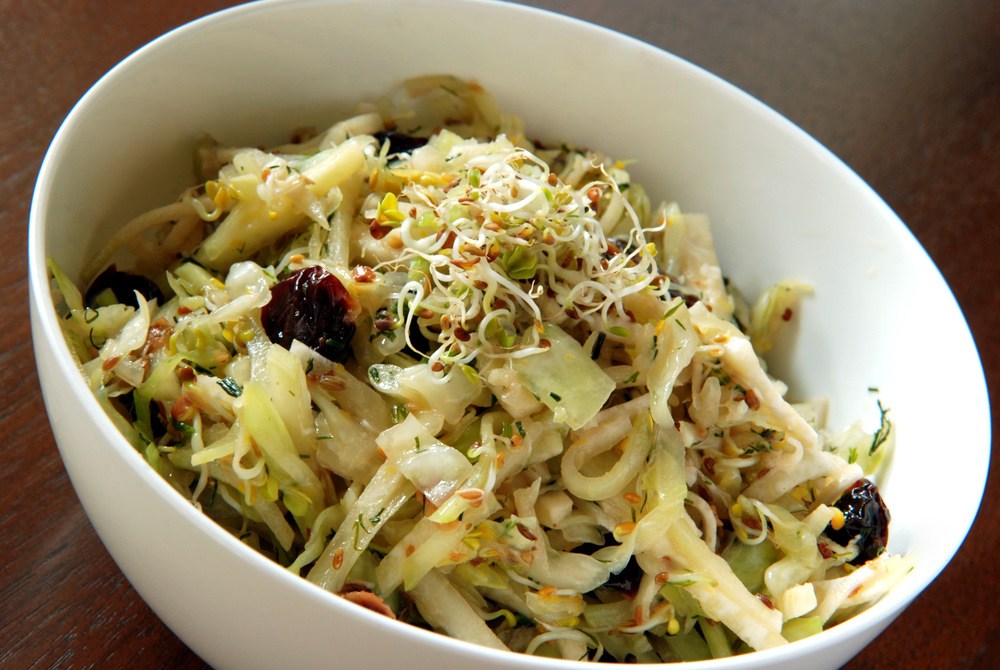
Crisp, fresh and SO simple – kohlrabi is massively underrated, and this German-style salad is the perfect way to try it.
Tastes: crisp and mild, with wafer-thin kohlrabi and a fresh, lemony dressing with sprouts and spring onion.
Meet the kohlrabi
Kohlrabi looks a bit like an alien life form (it was actually developed in Northern Europe back in the 16th century), but don’t let that put you off! It has a mild, sweet, slightly peppery crunch – somewhere between a broccoli stem and a crisp apple – and it soaks up the flavour of whatever you dress it with.
It’s a great source of vitamin C and fibre, and with the sprouts, lemon and good olive oil on top, it’s about as fresh and alkaline as lunch gets. Guten Appetit!
Why you’ll love it
- Vitamin C: over two and a half day’s worth.
- About 14 g fibre a serve.
- Crisp, mild and fresh.
- 10 minutes to make.
Good for
Vitamin C, copper, vitamin B6 and folate contribute to the normal function of the immune system.
Vitamin C, copper, vitamin E and manganese contribute to the protection of cells from oxidative stress. It also contains plant compounds with antioxidant activity, including quercetin and flavonoids.
Vitamin B6, folate, magnesium and pantothenic acid contribute to the reduction of tiredness and fatigue.
Vitamin K, manganese, magnesium and phosphorus contribute to the maintenance of normal bones.
Potassium contributes to the maintenance of normal blood pressure.
Tags use approved nutrient health-claim wording, for nutrients that give at least 10% of the Daily Value per serve. Plant compounds like these have no Daily Value, so we only say they’re there.
Key nutrients per serve
Contains: manganese (26%), folate (18%), magnesium (18%), thiamin (17%), phosphorus (15%), pantothenic acid (14%), niacin (10%), iron (10%) and calcium (8%).
Plant compounds: quercetin from the onion and citrus flavonoids from the lemon.
% of US Daily Value for adults, per serve (half the recipe). Estimated from USDA FoodData Central values for the ingredients as listed, so treat these as upper estimates. Uses about 750 g kohlrabi (3 bulbs, peeled) and alfalfa values for the sprouts; excludes salt and pepper; anything over 100% shows as 100%+.
Kohlrabi Salad with Sprout Dressing
Ingredients
Equipment
Method
- Finely chop the spring onion or shallot.
- Make a dressing with the oil, lemon juice, salt, pepper and sprouts, and mix in the onion.
- Peel the kohlrabi and cut into very thin slices.
- Lay the slices on a big plate and cover with the dressing.
Swaps
- Apple is lovely sliced in with the kohlrabi.
- Herbs: add dill or chives to the dressing.
- Less oil: use 2 tbsp.
Storing it
Best fresh – dress just before serving.
Good to know
- Raw sprouts can carry bacteria, so they aren’t recommended in pregnancy or for anyone with a weakened immune system.
Try next
The Alkaline Life Club has everything in the Recipe Club, plus coaching, live Q&A and a community to keep you going.
See the Alkaline Life ClubSources
Nutrient values: USDA FoodData Central, SR Legacy (kohlrabi 168424, spring onions 170005, alfalfa sprouts 168384, olive oil 171413, lemon juice 167747). Plant compounds are named where the ingredient is a well-documented source; flavonoids follow the USDA Database for the Flavonoid Content of Selected Foods, Release 3.3. Daily Values: US Food and Drug Administration.