Summer Salad with Mint & Lemon Dressing
Simple beyond belief – and yet it packs such flavour, nutrition and texture. It tastes, looks and feels SO different to most salads.
Tastes: fresh and summery, with ribbons of asparagus and griddled courgette, peas, avocado and herbs in a zingy mint and lemon dressing.
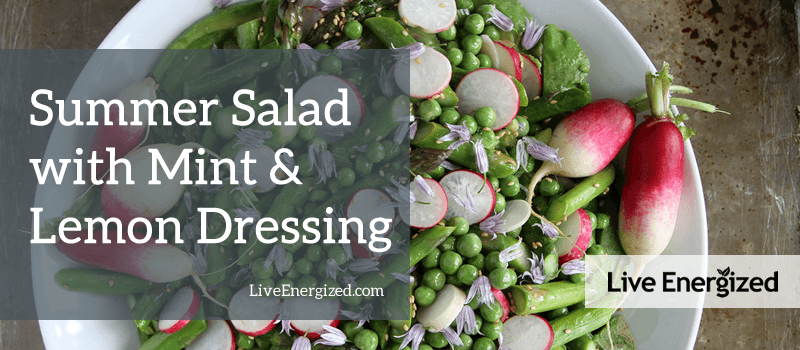
Pretty, original and nourishing
The avocado and dressing bring plenty of healthy fats, the asparagus brings B vitamins, folate, selenium and manganese, the coriander brings lots of chlorophyll, and the peas are a great source of manganese, fibre and vitamin C.
It’s a pretty, delicious, original, textured salad with a big alkaline nourishment punch!
Why you’ll love it
- Vitamin K: about twice your daily needs.
- About 10 g fibre a serve.
- A dressing that keeps a week in the fridge.
- Something different from the usual salad.
Good for
Vitamin C, copper, folate and vitamin B6 contribute to the normal function of the immune system.
Vitamin C, copper, vitamin E and riboflavin contribute to the protection of cells from oxidative stress. It also contains plant compounds with antioxidant activity, including lutein, beta-carotene and apigenin.
Folate, pantothenic acid, riboflavin and vitamin B6 contribute to the reduction of tiredness and fatigue.
Vitamin K, manganese, magnesium and zinc contribute to the maintenance of normal bones.
Riboflavin, vitamin A and zinc contribute to the maintenance of normal vision. It also contains lutein and zeaxanthin, the carotenoids found in the macula of the eye.
Potassium contributes to the maintenance of normal blood pressure.
Tags use approved nutrient health-claim wording, for nutrients that give at least 10% of the Daily Value per serve. Plant compounds like lutein have no Daily Value, so we only say they’re there.
Key nutrients per serve
Contains: pantothenic acid (32%), riboflavin (31%), manganese (30%), vitamin B6 (29%), iron (28%), niacin (23%), potassium (20%), vitamin A (19%), magnesium (17%), zinc (17%), phosphorus (15%) and calcium (7%).
Plant compounds: lutein and zeaxanthin (about 4.8 mg), beta-carotene (about 2 mg), chlorophyll, apigenin from the parsley, sulphur compounds from the garlic and citrus flavonoids from the lemon.
% of US Daily Value for adults, per serve (half the salad with ¼ cup of dressing). Estimated from USDA FoodData Central values for the ingredients as listed; cooking reduces some vitamins, so treat these as upper estimates. Counts about ¼ cup of the dressing (it makes about 1½ cups); excludes salt and pepper; anything over 100% shows as 100%+.
Summer Salad with Mint & Lemon Dressing
Ingredients
Equipment
Method
- Blanch the asparagus in boiling water for 1 minute, then drain and rinse under cold water straight away. Slice lengthways into long strips.
- Gently fry the courgette ribbons in a griddle pan (or a regular pan) until they just start to brown.
- Combine the asparagus, courgette, avocado, coriander, parsley, radish and peas in a large bowl.
- Blend all the dressing ingredients in a blender or food processor.
- Dress with about ¼ cup of the dressing, season to taste and you’re away!
Notes
Swaps
- Save money: use one bunch of asparagus.
- More protein: add a can of rinsed cannellini beans.
- Edamame instead of peas.
Storing it
Best fresh. The dressing keeps for a week in the fridge.
Good to know
- High in vitamin K. If you take warfarin or another blood thinner, keep your greens intake steady and talk to your doctor before eating more leafy greens than usual.
Try next
The Alkaline Life Club has everything in the Recipe Club, plus coaching, live Q&A and a community to keep you going.
See the Alkaline Life ClubSources
Nutrient values: USDA FoodData Central, SR Legacy (avocado 171705, asparagus 168389, coriander leaves 169997, parsley 170416, radishes 169276, peas 170016, zucchini 169291, lemon juice 167747, shallots 170499, garlic 169230, olive oil 171413, mustard 172234, mint 173475). Plant compounds are named where the ingredient is a well-documented source; flavonoids follow the USDA Database for the Flavonoid Content of Selected Foods, Release 3.3. Daily Values: US Food and Drug Administration.