Anti-Inflammatory Green Smoothie
Fresh ginger and turmeric, spinach, watercress, avocado, red pepper, parsley and a pinch of cayenne, blended with coconut water. No special ingredients or funky kit.
Tastes: fresh, green and zingy, with ginger and a cayenne kick, smoothed out by avocado.
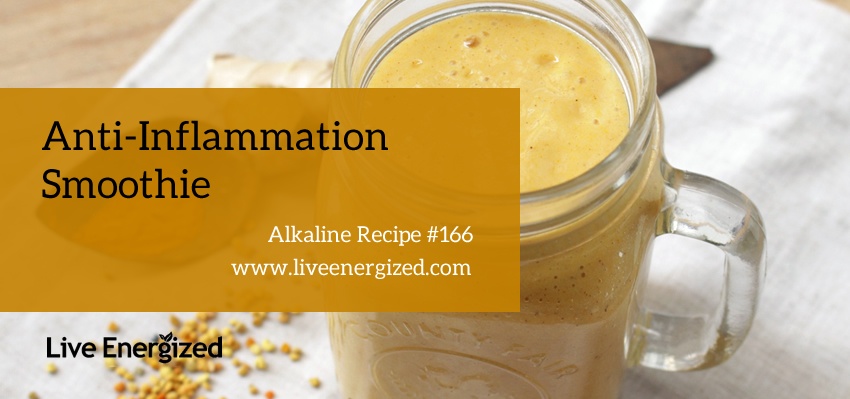
One simple, anti-inflammatory smoothie
The biggest question in my inbox was: “Send me some anti-inflammation recipes, Ross!” Well, ask and ye shall receive!
This is a delicious, alkaline-rich smoothie that will knock your socks off. No special ingredients or funky kit – it’s simple food used for its raw, delicious power.
Turmeric is the star. In a small 2012 pilot trial in people with rheumatoid arthritis, a curcumin extract improved symptoms more than the anti-inflammatory drug diclofenac (Chandran and Goel, 2012). That was a concentrated supplement rather than a smoothie, but it shows why turmeric and ginger are worth having in your kitchen every day.
Why you’ll love it
- Vitamin K: over two days’ worth a glass.
- Vitamin C: over 80% of your daily needs.
- Fresh ginger and turmeric, plus a pinch of cayenne.
- No special ingredients or funky kit.
Good for
Vitamin C, copper, folate and vitamin B6 contribute to the normal function of the immune system.
Vitamin C, manganese, copper and riboflavin contribute to the protection of cells from oxidative stress. It also contains plant compounds with antioxidant activity, including lutein, beta-carotene and apigenin.
Folate, pantothenic acid, vitamin B6 and riboflavin contribute to the reduction of tiredness and fatigue.
Vitamin K, manganese and magnesium contribute to the maintenance of normal bones.
Riboflavin and vitamin A contribute to the maintenance of normal vision. It also contains lutein and zeaxanthin, the carotenoids found in the macula of the eye.
Potassium contributes to the maintenance of normal blood pressure.
Tags use approved nutrient health-claim wording, for nutrients that give at least 10% of the Daily Value per glass. Plant compounds like lutein have no Daily Value, so we only say they’re there.
Key nutrients per glass
Contains: vitamin B6 (24%), riboflavin (23%), vitamin A (22%), potassium (21%), magnesium (19%), vitamin E (18%), iron (16%), niacin (13%) and calcium (7%).
Plant compounds: lutein and zeaxanthin (about 3.5 mg), beta-carotene (about 2.2 mg), chlorophyll, apigenin from the parsley, glucosinolates from the watercress, curcumin from the turmeric, gingerols from the ginger and capsaicin from the cayenne.
% of US Daily Value for adults, per glass (half the recipe). Estimated from USDA FoodData Central values for the ingredients as listed, so treat these as upper estimates. Uses ground turmeric values for the fresh root and parsley for the herbs; excludes the salt; anything over 100% shows as 100%+.
Anti-Inflammatory Green Smoothie
Ingredients
Equipment
Method
- Grate the ginger and turmeric into the blender and add the avocado and coconut water.
- Blend to form a base.
- Add the remaining ingredients and blend until smooth. I hope you love it!
Swaps
- Milder: start with a small pinch of cayenne.
- Less sweet: use filtered water instead of coconut water.
- No fresh turmeric? Use ½ tsp ground turmeric.
Storing it
Best fresh. It keeps in a sealed jar in the fridge for a few hours.
Good to know
- High in vitamin K. If you take warfarin or another blood thinner, keep your greens intake steady and talk to your doctor before making green smoothies a daily habit.
- Turmeric stains, so wash your grater and blender straight away.
Ross’s tip
I try to have these ingredients as much as possible anyway, but this is a perfect way to get all of them in one delicious smoothie!
Try next
The Alkaline Life Club has everything in the Recipe Club, plus coaching, live Q&A and a community to keep you going.
See the Alkaline Life ClubSources
Nutrient values: USDA FoodData Central, SR Legacy (ginger 169231, turmeric 172231, baby spinach 168462, watercress 170068, avocado 171705, red pepper 170108, parsley 170416, coconut water 170174, cayenne 170932). Plant compounds are named where the ingredient is a well-documented source; flavonoids follow the USDA Database for the Flavonoid Content of Selected Foods, Release 3.3. Daily Values: US Food and Drug Administration. Curcumin and arthritis: Chandran and Goel, “A randomized, pilot study to assess the efficacy and safety of curcumin in patients with active rheumatoid arthritis,” Phytotherapy Research 26 (2012): 1719–1725.