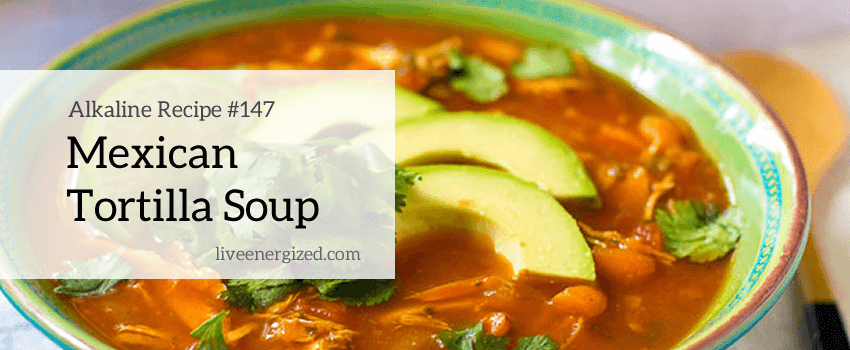
Mexican Tortilla Soup
A fantastic alkaline recipe that takes no time at all to prepare – great as a warmer in winter, or a refresher in summer.
Tastes: bright and zesty, with lime, chilli, creamy avocado and crunchy toasted tortilla strips.
A great way to alkalise, all year round
This is really easy, a great way to alkalise and perfect all year round. Avocado, spinach, coriander, tomato and corn go into a quick veggie broth, with crispy tortilla strips on top.
Why you’ll love it
- Vitamin K: almost twice your daily needs a bowl.
- About 13 g fibre a bowl.
- Ready in 20 minutes.
- Lutein-rich spinach, avocado and coriander.
Good for
Vitamin C, folate, copper and vitamin B6 contribute to the normal function of the immune system.
Vitamin C, copper, riboflavin and manganese contribute to the protection of cells from oxidative stress. It also contains plant compounds with antioxidant activity, including lutein, beta-carotene and lycopene.
Folate, vitamin B6, pantothenic acid and riboflavin contribute to the reduction of tiredness and fatigue.
Vitamin K, manganese, magnesium and phosphorus contribute to the maintenance of normal bones.
Riboflavin, vitamin A and zinc contribute to the maintenance of normal vision. It also contains lutein and zeaxanthin, the carotenoids found in the macula of the eye.
Potassium contributes to the maintenance of normal blood pressure.
Tags use approved nutrient health-claim wording, for nutrients that give at least 10% of the Daily Value per bowl. Plant compounds like lutein have no Daily Value, so we only say they’re there.
Key nutrients per bowl
Contains: thiamin (33%), riboflavin (31%), niacin (31%), vitamin A (30%), manganese (30%), vitamin E (29%), potassium (26%), magnesium (26%), selenium (20%), phosphorus (18%), iron (16%), zinc (16%) and calcium (10%).
Plant compounds: lutein and zeaxanthin (about 4.5 mg), beta-carotene (about 3.1 mg), lycopene (about 1.5 mg), chlorophyll, sulphur compounds from the garlic, citrus flavonoids from the lime and capsaicin from the cayenne.
% of US Daily Value for adults, per bowl (half the recipe). Estimated from USDA FoodData Central values for the ingredients as listed; cooking reduces some vitamins, so treat these as upper estimates. Uses low-sodium vegetable stock and a whole wheat tortilla; excludes salt and pepper added to taste; anything over 100% shows as 100%+.
Mexican Tortilla Soup
Ingredients
Equipment
Method
- Slice the tortilla into strips about 1 cm wide and 5 cm long, and toast lightly under the grill.
- Bring the water to the boil in a large pan and dissolve the bouillon to make a veggie broth.
- Dice the pepper and tomato, roughly chop the coriander, and peel and dice the avocado. Finely dice the garlic, and slice the chilli to your hotness preference.
- Wash and roughly chop the spinach and dry it with a tea towel. Slice the corn kernels off the cob with a sharp knife.
- Add everything to the broth and heat through. Serve topped with the tortilla strips and a squeeze of lime.
Swaps
- Gluten-free: use a gluten-free or corn tortilla.
- Heartier: add a can of rinsed black beans.
- No fresh corn? Use ½ cup frozen corn kernels.
Storing it
Best fresh. The broth (without the avocado and tortilla) keeps in the fridge for 2 days.
Good to know
- High in vitamin K. If you take warfarin or another blood thinner, keep your greens intake steady and talk to your doctor before eating more leafy greens than usual.
- Sprouted wraps usually contain wheat. See Swaps for gluten-free.
Ross’s tip
You may choose to keep the tomato and chilli to one side and throw them in right at the end so that they stay quite raw – that’s just how I do it.
Try next

The Alkaline Life Club has everything in the Recipe Club, plus coaching, live Q&A and a community to keep you going.
See the Alkaline Life ClubSources
Nutrient values: USDA FoodData Central, SR Legacy (avocado 171705, red pepper 170108, tomatoes 170457, coriander leaves 169997, spinach 168462, garlic 169230, lime juice 168156, sweet corn 169998, jalapeño 168576, cayenne 170932, whole wheat tortilla 174081). Plant compounds are named where the ingredient is a well-documented source; flavonoids follow the USDA Database for the Flavonoid Content of Selected Foods, Release 3.3. Daily Values: US Food and Drug Administration.