Tunisian Chickpea Soup
Slow-simmered chickpeas with garlic, cumin, coriander and turmeric, stirred through with sautéed carrot, celery, onion and kale and finished with lemon.
Tastes: warm, earthy and fragrant with Arabic spices, garlic and a squeeze of lemon.
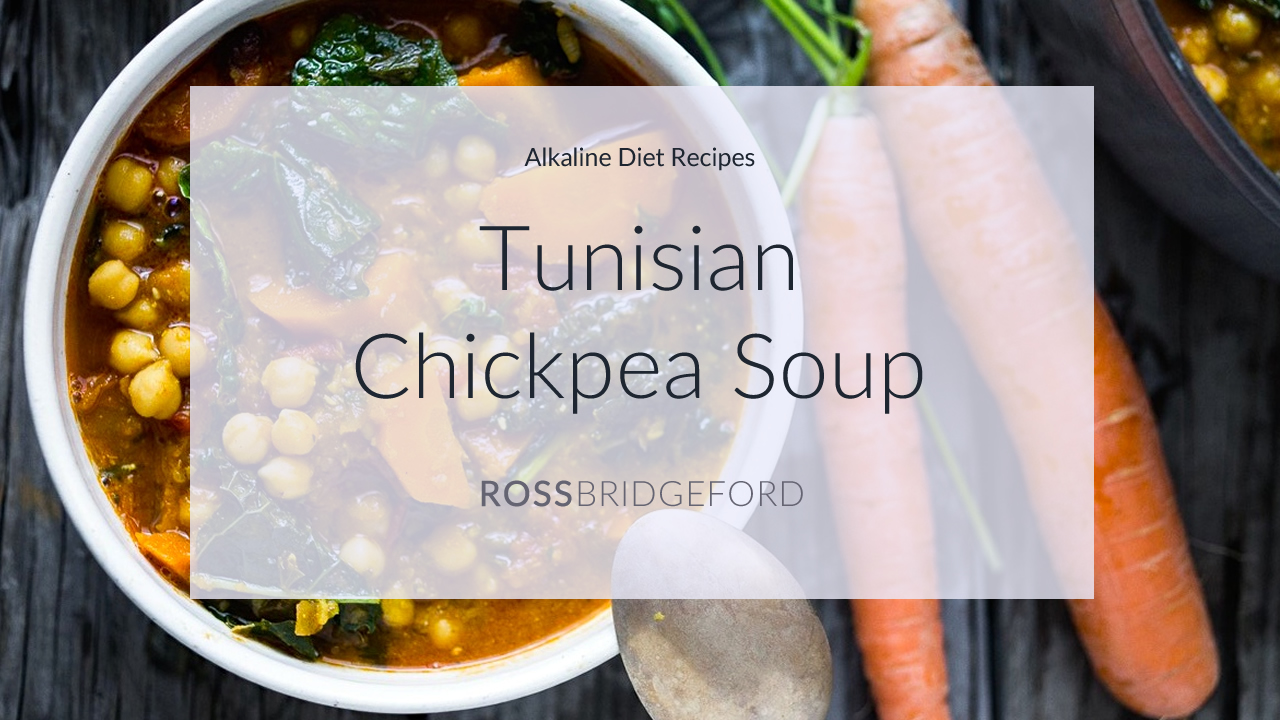
An absolute cracker
This is an absolute cracker – filling, warming, and I just love it. While it’s obviously awesome as a winter warmer, I also still love it in summer: with the Arabic flavours and spices you can almost picture yourself enjoying it on a hot Tunisian evening.
Nutrient-wise, this soup has a superb range, with lots of plant protein, folate and manganese – and tons of fibre too. Add the turmeric, kale, garlic, celery and fresh coriander, and wow – it’s a powerhouse soup.
It IS best cooked slowly for a couple of hours, but if you’re pressed for time (or the aromas get too much for you to resist!), use canned chickpeas and it’s ready in about 30 minutes.
Why you’ll love it
- 20 g plant protein and 14 g fibre a bowl.
- Folate: over a day’s worth.
- Manganese: nearly twice your daily needs.
- Arabic spices: cumin, coriander and turmeric.
Good for
Folate, copper, vitamin B6 and vitamin C contribute to the normal function of the immune system.
Manganese, copper, vitamin C and zinc contribute to the protection of cells from oxidative stress. It also contains plant compounds with antioxidant activity, including lutein, beta-carotene and apigenin.
Folate, vitamin B6, pantothenic acid and iron contribute to the reduction of tiredness and fatigue.
Protein contributes to the maintenance of muscle mass, and magnesium, potassium and calcium contribute to normal muscle function.
Manganese, vitamin K, zinc and magnesium contribute to the maintenance of normal bones.
Vitamin A, zinc and riboflavin contribute to the maintenance of normal vision. It also contains lutein and zeaxanthin, the carotenoids found in the macula of the eye.
Potassium contributes to the maintenance of normal blood pressure.
Tags use approved nutrient health-claim wording, for nutrients that give at least 10% of the Daily Value per bowl. Plant compounds like lutein have no Daily Value, so we only say they’re there.
Key nutrients per bowl
Contains: pantothenic acid (36%), vitamin A (34%), vitamin C (34%), iron (29%), zinc (26%), riboflavin (23%), potassium (23%), magnesium (23%), phosphorus (23%), vitamin E (21%), niacin (14%) and calcium (12%).
Plant compounds: lutein and zeaxanthin (about 1 mg), beta-carotene (about 3.2 mg), chlorophyll, apigenin from the celery, quercetin and kaempferol from the kale, quercetin from the onion, glucosinolates from the kale, curcumin from the turmeric, sulphur compounds from the garlic and citrus flavonoids from the lemon.
% of US Daily Value for adults, per bowl (half the recipe). Estimated from USDA FoodData Central values for the ingredients as listed; cooking reduces some vitamins, so treat these as upper estimates. Uses 2 tbsp olive oil in total (the original used 8 tbsp for twice the amount); excludes salt and pepper; anything over 100% shows as 100%+.
Tunisian Chickpea Soup
Ingredients
Equipment
Method
- Gently heat 1 tbsp of the oil in a big pot. Add the garlic and cook gently for about 2 minutes.
- Add the chickpeas, water, turmeric, cumin and ground coriander. Bring to the boil, then reduce the heat and simmer for about 2½ hours, until the chickpeas are very tender. Top up with water if needed.
- Meanwhile, heat the rest of the oil in a frying pan and gently fry the carrot, onion, kale or chard and celery, stirring, until softened.
- Add the veg to the soup and stir well. Purée about half the soup with a stick blender (or in a blender) and stir it back in.
- Season with salt, pepper and the lemon juice.
- Serve in warmed bowls, garnished with the fresh coriander. Enjoy!
Swaps
- Short on time? Use 2 cans (400 g each) of chickpeas, drained, with 750 ml water, and simmer for 30 minutes.
- Greens: spinach works too – stir it in at the end.
- Feeding four? Double everything.
Storing it
Keeps in the fridge for 3 days, and freezes well for up to 3 months.
Try next
The Alkaline Life Club has everything in the Recipe Club, plus coaching, live Q&A and a community to keep you going.
See the Alkaline Life ClubSources
Nutrient values: USDA FoodData Central, SR Legacy (dried chickpeas 173756, garlic 169230, olive oil 171413, carrots 170393, celery 169988, onion 170000, kale 168421, cumin 170923, turmeric 172231, coriander seed 170922, coriander 169997, lemon juice 167747). Plant compounds are named where the ingredient is a well-documented source; flavonoids follow the USDA Database for the Flavonoid Content of Selected Foods, Release 3.3. Daily Values: US Food and Drug Administration.