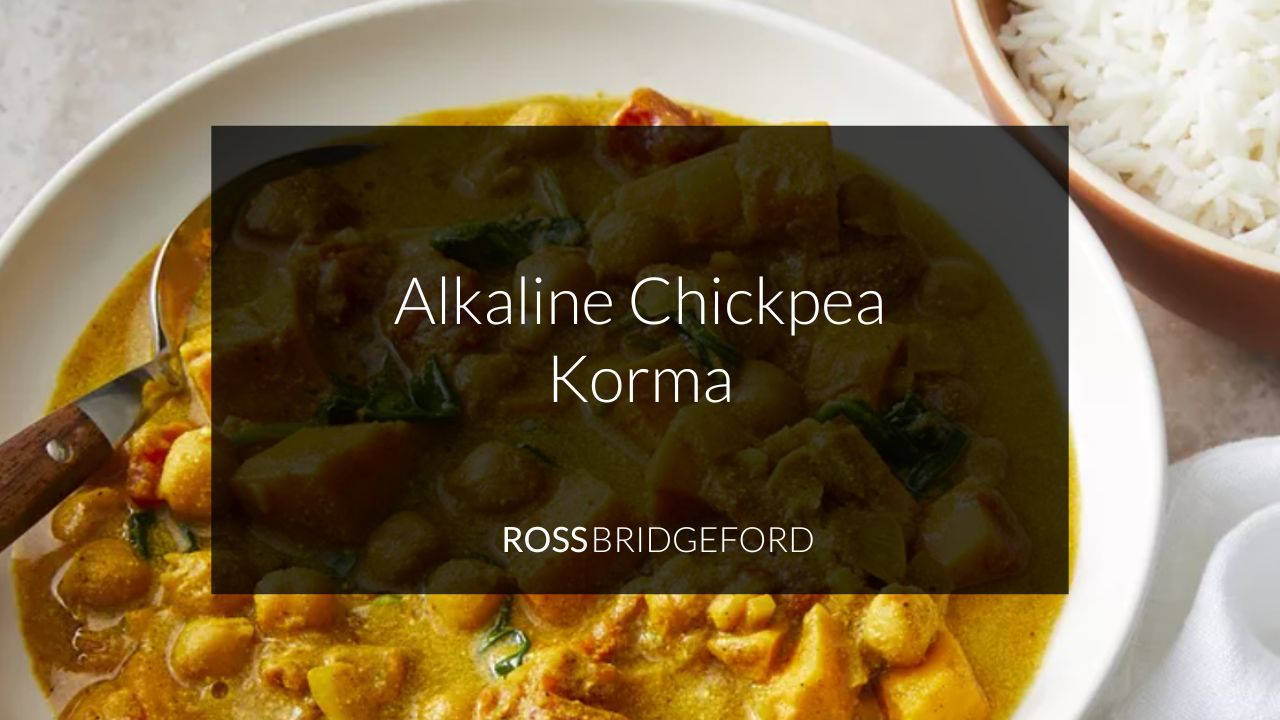
Alkaline Chickpea Korma
One of my favourites: the warm, comforting spices of a traditional korma (which I absolutely LOVE) with chickpeas, tofu and fresh alkaline veggies. Each serve has 26 g of protein and 12 g of fibre.
Tastes: creamy, mild and warmly spiced, like a proper korma.
Quick, easy and highly alkaline
As with all of my recipes, it’s quick, easy and highly alkaline. It’s also perfect for bulk making, as it freezes really well.
And remember the satiation equation: protein + fibre + fat = full for a long time. This recipe contains all three in healthy abundance.
Why you’ll love it
- Supports digestion: the fibre in chickpeas and vegetables helps promote a healthy gut.
- Steady energy: the combination of fibre, protein and healthy fats helps keep your energy steady.
- Anti-inflammatory: turmeric and ginger are packed with anti-inflammatory properties.
- Quick and simple: ready in under 30 minutes, perfect for busy days.
Good for
Copper, iron, selenium and vitamin A contribute to the normal function of the immune system.
Manganese, copper, selenium and vitamin C contribute to the protection of cells from oxidative stress. It also contains plant compounds with antioxidant activity, including lutein, beta-carotene and quercetin.
Iron, magnesium, vitamin B6 and folate contribute to the reduction of tiredness and fatigue.
Protein contributes to the maintenance of muscle mass, and calcium, magnesium and potassium contribute to normal muscle function.
Manganese, vitamin K, calcium and magnesium contribute to the maintenance of normal bones.
Vitamin A, zinc and riboflavin contribute to the maintenance of normal vision. It also contains lutein and zeaxanthin, the carotenoids found in the macula of the eye.
Potassium contributes to the maintenance of normal blood pressure.
Tags use approved nutrient health-claim wording, for nutrients that give at least 10% of the Daily Value per serve. Plant compounds like lutein have no Daily Value, so we only say they’re there.
Key nutrients per serve
Contains: selenium (41%), vitamin A (39%), vitamin B6 (37%), thiamin (37%), phosphorus (37%), folate (35%), vitamin C (32%), zinc (32%), niacin (28%), riboflavin (25%), potassium (24%) and pantothenic acid (19%).
Plant compounds: lutein and zeaxanthin (about 4 mg), beta-carotene (about 3.6 mg), plant omega-3 ALA (about 0.6 g), chlorophyll, quercetin from the onion, curcumin from the turmeric, gingerols from the ginger, sulphur compounds from the garlic and capsaicin from the chilli.
% of US Daily Value for adults, per serve (half the recipe, with the rice). Estimated from USDA FoodData Central values for the ingredients as listed; cooking reduces some vitamins, so treat these as upper estimates. Excludes salt and pepper added to taste; anything over 100% shows as 100%+.
Alkaline Chickpea Korma
Ingredients
Equipment
Method
- Heat the coconut oil in a medium-sized frying pan over medium heat. Add the onion, garlic and ginger, and sauté for 2–3 minutes until fragrant and translucent.
- Stir in the cumin, coriander, turmeric, cinnamon and chilli powder (if using). Toast the spices for 1 minute to bring out their flavour.
- Pour in the coconut milk and mix well. Add the chickpeas, tofu, zucchini and carrot. Reduce the heat to low, cover and simmer for 10–12 minutes until the vegetables are tender.
- Add the spinach leaves and let them wilt for 2–3 minutes. Season with Himalayan salt and pepper if you like.
- Serve the korma over the brown rice and garnish with fresh coriander.
Notes
Swaps
- Add more greens: toss in kale or Swiss chard during the last few minutes of cooking.
- Spice it up: add a pinch of cayenne or a diced chilli along with the other spices.
- Protein boost: sprinkle hemp seeds on top (my fave).
Storing it
This chickpea korma freezes well. Make a double batch and store portions in the freezer for quick, healthy meals during busy weeks.
Good to know
- Contains soy (tofu). Swap it for extra chickpeas if you avoid soy.
Ross’s tip
Squeeze a little fresh lime juice over the korma before serving for a burst of tangy freshness, or cook it with some torn kaffir lime leaves.
Try next
The Alkaline Life Club has everything in the Recipe Club, plus coaching, live Q&A and a community to keep you going.
See the Alkaline Life ClubSources
Nutrient values: USDA FoodData Central, SR Legacy (coconut oil 171412, onion 170000, garlic 169230, ginger 169231, cumin 170923, coriander seed 170922, turmeric 172231, cinnamon 171320, chilli powder 171319, coconut milk 170173, chickpeas 173801, zucchini 169291, carrot 170393, spinach 168462, tofu 172475, coriander leaves 169997, brown rice 169704). Plant compounds are named where the ingredient is a well-documented source; flavonoids follow the USDA Database for the Flavonoid Content of Selected Foods, Release 3.3. Daily Values: US Food and Drug Administration.