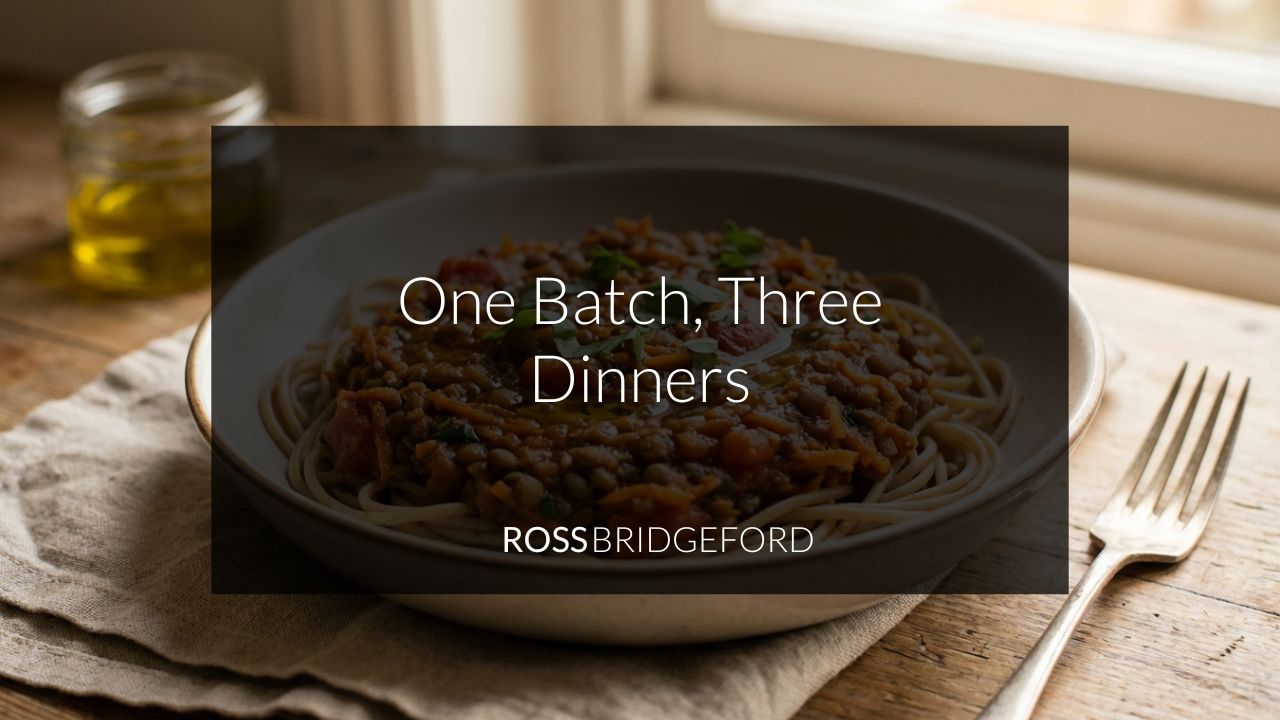
Lentil Bolognese Base (Make Once, Eat 3 Ways)
Make it once. Use it three different ways. A rich, hearty lentil and tomato base that turns into dinner all week.
Tastes: rich, hearty and slightly sweet, like a classic bolognese.
Take the daily decision out of dinner
If you’ve ever stood in the kitchen at 5:30pm wondering what to make, you’re not alone. Most people don’t struggle with healthy eating because they lack knowledge. They struggle because dinner feels like a daily decision that has to be made from scratch. That’s why I love creating flexible dinner bases.
Think of this as a plant-forward version of a classic bolognese: rich, hearty, slightly sweet from the vegetables and full of flavour, but lighter, more mineral-rich and far easier on digestion. Lentils bring plant protein, fibre, iron, magnesium and potassium, and help support blood sugar balance and steady energy. Tomatoes bring lycopene, an antioxidant linked to heart and cellular health. Garlic’s sulphur compounds help support your body’s natural detoxification, and olive oil brings anti-inflammatory fats.
Why you’ll love it
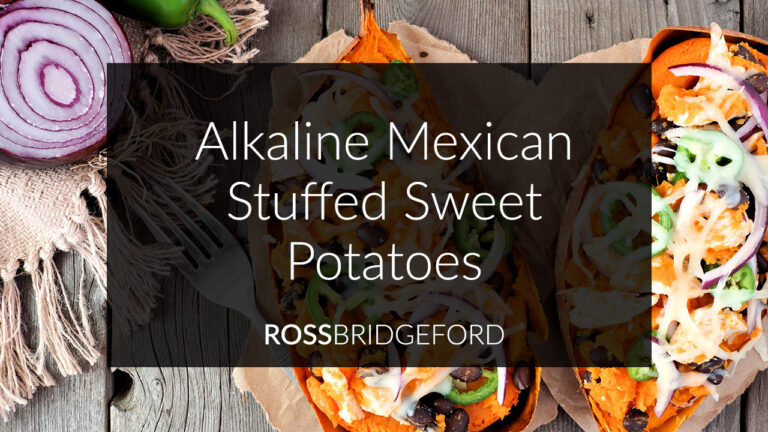
- Three dinners from one pot: a classic bowl, stuffed sweet potatoes or a lentil chilli.
- Freezer-friendly. Make a big batch and freeze portions for later.
- Family-friendly. Adjust the spices for whoever you’re cooking for.
- Folate: about two-thirds of your daily needs in each serve of the base.
Good for
Copper, folate, vitamin A and vitamin B6 contribute to the normal function of the immune system.
Copper, manganese, vitamin C and zinc contribute to the protection of cells from oxidative stress. It also contains plant compounds with antioxidant activity, including beta-carotene, lycopene and apigenin.
Folate, pantothenic acid, vitamin B6 and iron contribute to the reduction of tiredness and fatigue.
Protein contributes to the maintenance of muscle mass, and potassium and magnesium contribute to normal muscle function.
Manganese, vitamin K, zinc and phosphorus contribute to the maintenance of normal bones.
Vitamin A, zinc and riboflavin contribute to the maintenance of normal vision.
Potassium contributes to the maintenance of normal blood pressure.
Tags use approved nutrient health-claim wording, for nutrients that give at least 10% of the Daily Value per serve. Plant compounds like these have no Daily Value, so we only say they’re there.
Key nutrients per serve
Contains: vitamin B6 (29%), iron (28%), vitamin K (21%), vitamin C (19%), niacin (19%), potassium (18%), zinc (18%), vitamin E (17%), phosphorus (16%), riboflavin (15%), magnesium (13%) and calcium (7%).
Plant compounds: beta-carotene (about 2.7 mg), lycopene (about 6.3 mg), apigenin from the celery, quercetin from the onion and sulphur compounds from the garlic.
% of US Daily Value for adults, per serve (¼ of the recipe). Estimated from USDA FoodData Central values for the ingredients as listed; cooking reduces some vitamins, so treat these as upper estimates. The base only, made with water; excludes the optional zucchini and whatever you serve it with; anything over 100% shows as 100%+.
Lentil Bolognese Base (Make Once, Eat 3 Ways)
Ingredients
Equipment
Method
- Heat the olive oil in a large saucepan over medium heat.
- Add the onion and sauté for 3–4 minutes until softened.
- Add the garlic, carrot, celery and zucchini if using. Cook for another 5 minutes until the vegetables begin to soften.
- Stir in the lentils, crushed tomatoes, tomato paste, herbs and bay leaf.
- Add the water or stock and bring to a gentle simmer.
- Cover and cook for 25–30 minutes, stirring occasionally, until the lentils are tender and the mixture thickens. Add more water if needed.
- Remove the bay leaf and season with salt and pepper. The base should be thick, rich and spoonable.
Notes
Swaps
- Stock or water: water keeps the salt lowest; a low-sodium stock adds extra flavour.
- Extra veg: add grated zucchini, mushrooms or spinach without changing the structure.
- Red lentils cook faster but go softer – great for a smoother sauce.
Storing it
Keeps in the fridge for 3–4 days and freezes well in portions.
Ross’s tip
Make it once. Use it three different ways. This is how alkaline eating becomes practical.
Try next
The Alkaline Life Club has everything in the Recipe Club, plus coaching, live Q&A and a community to keep you going.
See the Alkaline Life ClubSources
Nutrient values: USDA FoodData Central, SR Legacy (olive oil 171413, onion 170000, garlic 169230, carrot 170393, celery 169988, lentils 172420, crushed tomatoes 170501, tomato paste 170459, oregano 171328, dried basil 171317). Plant compounds are named where the ingredient is a well-documented source; flavonoids follow the USDA Database for the Flavonoid Content of Selected Foods, Release 3.3. Daily Values: US Food and Drug Administration.