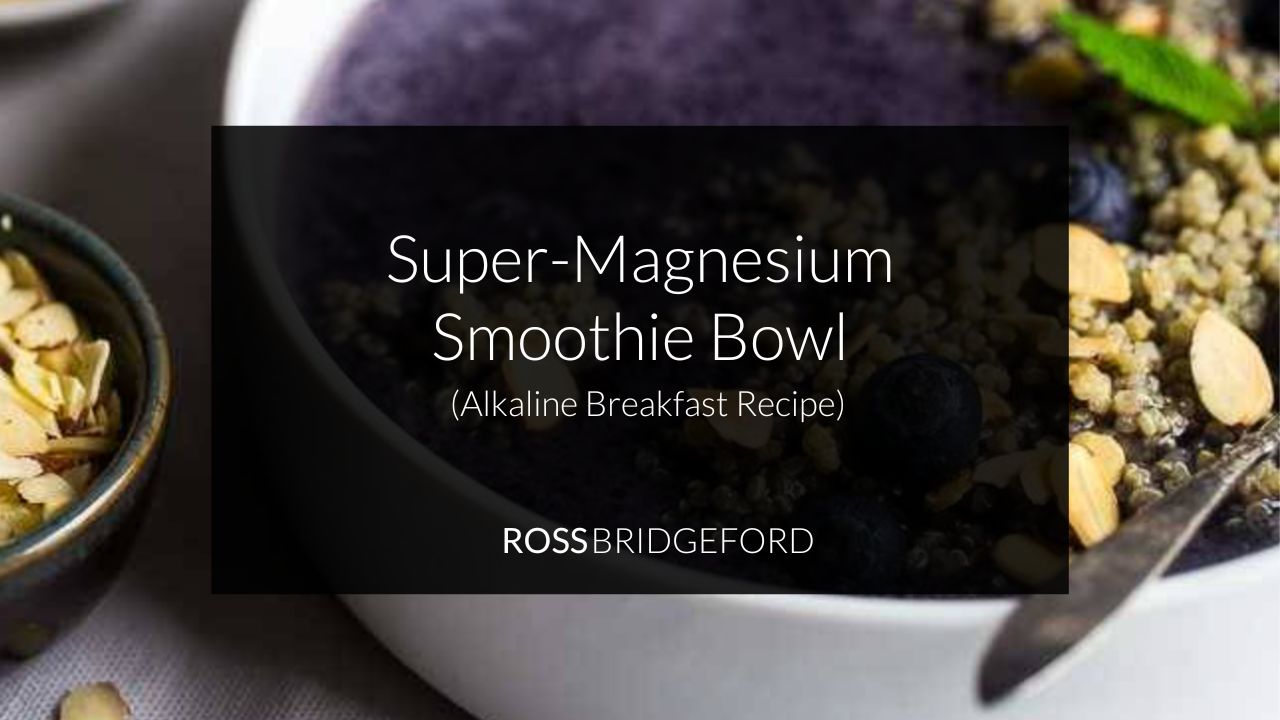
Super-Magnesium Smoothie Bowl
Magnesium is SUCH an essential mineral, and this delicious bowl gives you more than half your daily needs in one hit.
Tastes: thick, silky and chocolatey, with sweet blueberries.
Getting magnesium in the diet
Magnesium is essential. Its roles include protein synthesis, muscle relaxation, nerve function and bone health, and it plays a part in blood sugar and blood pressure regulation too. And SO many of us don’t get enough: about half of Americans fall short of the average daily requirement, and in one French study more than 80% of women did.
If you live alkaline, with a diet rich in alkaline-forming foods, you will be absolutely fine. Pumpkin seeds, cashews, cacao, blueberries and oats are all plant-based, magnesium-rich and delicious – and they all go into this bowl.
Low magnesium has been linked with a higher risk of a long list of conditions, from chronic inflammation, heart disease and osteoporosis to some cancers. It is just too important to be lacking.
Why you’ll love it
- Magnesium: about 240 mg a bowl, more than half your daily needs.
- Pumpkin seeds and cashews. Two of the richest plant sources of magnesium, plus zinc and copper.
- Cacao and blueberries. Antioxidant-rich and delicious together.
- Ready in minutes. Soak the cashews the night before and it’s a 5-minute breakfast.
Good for
Copper, zinc, iron and selenium contribute to the normal function of the immune system.
Copper, vitamin E, manganese and zinc contribute to the protection of cells from oxidative stress. It also contains plant compounds with antioxidant activity, including anthocyanins, lignans and flavanols.
Magnesium, iron, riboflavin and niacin contribute to the reduction of tiredness and fatigue.
Protein contributes to the maintenance of muscle mass, and magnesium, calcium and potassium contribute to normal muscle function.
Manganese, magnesium, phosphorus and zinc contribute to the maintenance of normal bones.
Zinc and riboflavin contribute to the maintenance of normal vision.
Potassium contributes to the maintenance of normal blood pressure.
Tags use approved nutrient health-claim wording, for nutrients that give at least 10% of the Daily Value per bowl. Plant compounds like these have no Daily Value, so we only say they’re there.
Key nutrients per bowl
Contains: calcium (31%), iron (27%), thiamin (25%), selenium (18%), vitamin K (17%), riboflavin (15%), potassium (15%), niacin (14%), pantothenic acid (14%) and vitamin B6 (12%).
Plant compounds: plant omega-3 ALA (about 0.9 g), anthocyanins from the berries, lignans from the flaxseed and flavanols from the cacao.
% of US Daily Value for adults, per bowl (half the recipe). Estimated from USDA FoodData Central values for the ingredients as listed, so treat these as upper estimates. Excludes toppings. Almond milk values are for a calcium-fortified brand; anything over 100% shows as 100%+.
Super-Magnesium Smoothie Bowl
Ingredients
Equipment
Method
- Drain and rinse the soaked cashews.
- Blend all of the ingredients in a food processor or blender until the mixture is super silky and smooth.
- Pour into two bowls and top with extra nuts, seeds, blueberries and a dollop of coconut yoghurt!
Notes
Swaps
- No time to soak? Use 1 tbsp cashew butter instead of the cashews.
- Coconut milk instead of almond milk makes it richer.
- Nut-free: use sunflower seeds instead of cashews, tahini instead of almond butter, and oat milk.
Storing it
Best eaten straight away. You can blend it the night before and keep it covered in the fridge – it will thicken, so loosen it with a splash of milk.
Good to know
- Oats and gluten: oats don’t contain gluten by nature, but they can pick up traces when they’re milled alongside wheat. If you’re coeliac or very gluten-sensitive, choose certified gluten-free oats.
- Contains nuts (cashews, almond butter and almond milk).
Try next
The Alkaline Life Club has everything in the Recipe Club, plus coaching, live Q&A and a community to keep you going.
See the Alkaline Life ClubSources
Nutrient values: USDA FoodData Central, SR Legacy (cashews 170162, pumpkin seeds 170556, medjool date 168191, cocoa 169593, blueberries 173950, almond butter 168588, oats 173904, flaxseed 169414, almond milk 174832). Plant compounds are named where the ingredient is a well-documented source; flavonoids follow the USDA Database for the Flavonoid Content of Selected Foods, Release 3.3. Daily Values: US Food and Drug Administration. Magnesium intake: DiNicolantonio, O’Keefe and Wilson, “Subclinical Magnesium Deficiency: A Principal Driver of Cardiovascular Disease and a Public Health Crisis,” Open Heart 5 (2018): e000668.