Greens & Wild Rice Broth
I absolutely LOVE this soup. It’s SO quick to make, packed with flavour and bursting with goodness too.
Tastes: fragrant and savoury, with ginger, garlic, tender greens and nutty wild rice.
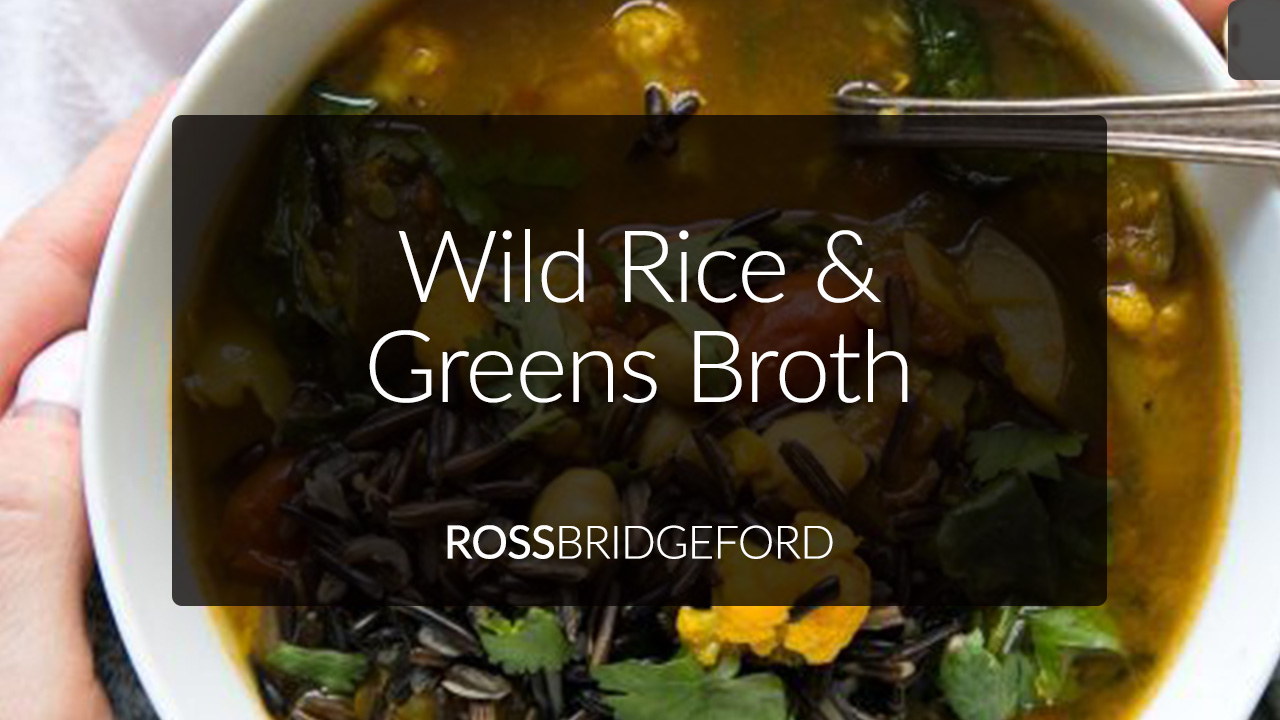
The health benefits of these ingredients are outstanding!
The broccolini, asparagus, leeks, ginger, garlic… ooooh, I want to have another bowl right now. It takes a little longer than some, because you want the flavour of the veggies to infuse into the stock, and wild rice takes a bit longer than regular rice too.
Broccolini’s sulforaphane may help protect against some cancers and support a healthy heart. Parsley’s beta-carotene has been linked with protection against stomach cancers. Coriander can help with digestion and has been studied for helping the body clear heavy metals. Asparagus is loaded with antioxidants that help protect your cells and may help support healthy blood pressure, and garlic can help support your immune system and healthy cholesterol and blood pressure.
Why you’ll love it
- Vitamins C and K: more than a full day’s worth of each.
- About 20 g plant protein a bowl, mostly from the wild rice.
- Anti-inflammatory ginger, plus an antioxidant powerhouse of onion, leek and garlic.
- Lunch or a light dinner, and easy to adjust to whatever veg you have.
Good for
Vitamin C, copper, folate and zinc contribute to the normal function of the immune system.
Vitamin C, copper, manganese and zinc contribute to the protection of cells from oxidative stress. It also contains plant compounds with antioxidant activity, including lutein, beta-carotene and apigenin.
Folate, niacin, magnesium and vitamin B6 contribute to the reduction of tiredness and fatigue.
Protein contributes to the maintenance of muscle mass, and magnesium, potassium and calcium contribute to normal muscle function.
Vitamin K, manganese, zinc and magnesium contribute to the maintenance of normal bones.
Zinc, riboflavin and vitamin A contribute to the maintenance of normal vision. It also contains lutein and zeaxanthin, the carotenoids found in the macula of the eye.
Potassium contributes to the maintenance of normal blood pressure.
Tags use approved nutrient health-claim wording, for nutrients that give at least 10% of the Daily Value per bowl. Plant compounds like lutein have no Daily Value, so we only say they’re there.
Key nutrients per bowl
Contains: niacin (50%), magnesium (50%), vitamin B6 (47%), riboflavin (46%), phosphorus (43%), iron (42%), pantothenic acid (40%), thiamin (33%), potassium (27%), vitamin E (23%), vitamin A (19%), selenium (16%) and calcium (12%).
Plant compounds: lutein and zeaxanthin (about 3.6 mg), beta-carotene (about 2 mg), chlorophyll, apigenin from the parsley, quercetin from the onion, glucosinolates from the broccoli, gingerols from the ginger and sulphur compounds from the garlic.
% of US Daily Value for adults, per bowl (half the recipe). Estimated from USDA FoodData Central values for the ingredients as listed; cooking reduces some vitamins, so treat these as upper estimates. Uses typical low-sodium vegetable stock values; anything over 100% shows as 100%+.
Greens & Wild Rice Broth
Ingredients
Equipment
Method
- Finely chop the garlic and grate the ginger, and set aside.
- Wash all your veggies, then dice the leek, leafy greens and onion. I like to cut mine into strips, then across the strips to make little squares.
- Heat the coconut oil in a large stockpot and sauté the onion until soft, about 5 minutes.
- Add the garlic and ginger with a pinch of salt, the tamari, black pepper and the other spices, and stir well.
- Add the leek, parsley, coriander, asparagus and broccolini and stir to combine.
- Add the rice and pour in the stock, plus a little extra water if needed, and simmer for 25–30 minutes until the rice is tender (but not too soft).
Swaps
- No leeks? Use an extra onion instead.
- More greens: add a few handfuls of baby spinach at the end.
- Garlic lover? Go up to 6 cloves.
Storing it
Keeps in an airtight container in the fridge for up to 3 days – but I doubt it will last that long!
Good to know
- High in vitamin K. If you take warfarin or another blood thinner, keep your greens intake steady and talk to your doctor before eating more leafy greens than usual.
- Tamari: choose one labelled gluten-free if you’re coeliac.
Try next

The Alkaline Life Club has everything in the Recipe Club, plus coaching, live Q&A and a community to keep you going.
See the Alkaline Life ClubSources
Nutrient values: USDA FoodData Central, SR Legacy (wild rice 169726, leek 169246, garlic 169230, ginger 169231, parsley 170416, broccoli 170379, asparagus 168389, coriander leaves 169997, tamari 174278, cumin 170923, fenugreek seed 171324, black pepper 170931, onion 170000, coconut oil 171412; typical values for low-sodium vegetable broth). Plant compounds are named where the ingredient is a well-documented source; flavonoids follow the USDA Database for the Flavonoid Content of Selected Foods, Release 3.3. Daily Values: US Food and Drug Administration.