Creamy Cashew, Lentil & Coconut Curry
So easy to make, so simple – yet so powerfully anti-inflammatory, alkaline and antioxidant-rich.
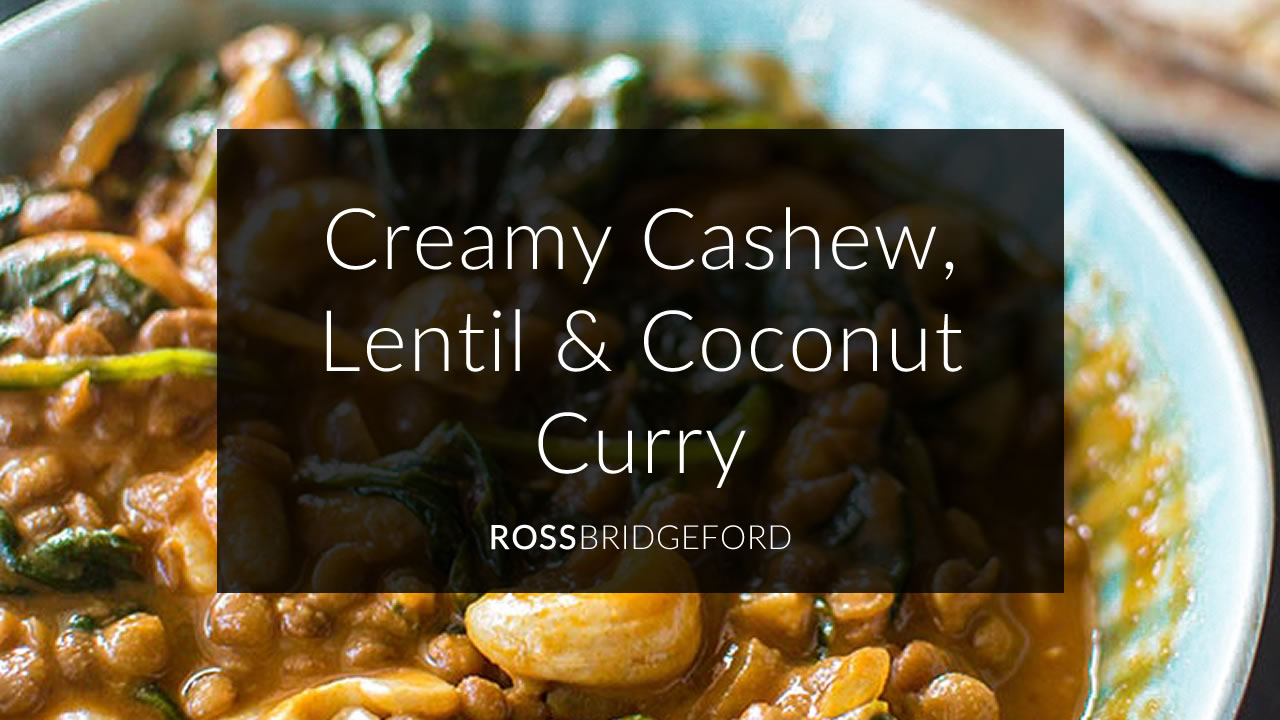
Tastes: rich and creamy, with ginger, turmeric and curry spices, and a little crunch from the cashews.
Why this curry is SO powerful
You might have heard me say this once or twice before, but… up to 95% of the most common, most deadly degenerative diseases we know of are preventable through diet and lifestyle choices. So many of us feel like getting cancer, heart disease, stroke, Alzheimer’s or type 2 diabetes is down to luck. And sure, genetics play a huge part in making some of us more predisposed (heart disease runs strong in my family, for example), but it’s not set in stone – you just have to make sure you live an abundantly healthy, nourished life.
Turmeric and ginger are two of the most researched anti-inflammatories on earth. And I want to introduce another one: boron, which is abundant in the cashews, lentils and greens here. Research suggests it may help with inflammation, bone formation, brain function, insulin and energy metabolism, immunity, and how your body uses vitamin D and oestrogen.
Why you’ll love it
- About 21 g plant protein and 16 g fibre a serve.
- Iron: over three-quarters of your daily needs.
- One pot, on the table in about 25 minutes.
- Boron-rich cashews, lentils and greens.
Good for
Copper, folate, iron and vitamin C contribute to the normal function of the immune system.
Manganese, copper, vitamin C and zinc contribute to the protection of cells from oxidative stress. It also contains plant compounds with antioxidant activity, including lutein, beta-carotene and lycopene.
Folate, iron, magnesium and vitamin B6 contribute to the reduction of tiredness and fatigue.
Protein contributes to the maintenance of muscle mass, and magnesium, potassium and calcium contribute to normal muscle function.
Vitamin K, manganese, magnesium and phosphorus contribute to the maintenance of normal bones.
Vitamin A, zinc and riboflavin contribute to the maintenance of normal vision. It also contains lutein and zeaxanthin, the carotenoids found in the macula of the eye.
Potassium contributes to the maintenance of normal blood pressure.
Tags use approved nutrient health-claim wording, for nutrients that give at least 10% of the Daily Value per serve. Plant compounds like lutein have no Daily Value, so we only say they’re there.
Key nutrients per serve
Contains: vitamin C (46%), phosphorus (42%), vitamin B6 (41%), vitamin A (39%), zinc (37%), potassium (36%), thiamin (33%), pantothenic acid (28%), vitamin E (25%), niacin (24%), riboflavin (23%), selenium (20%) and calcium (14%).
Plant compounds: lutein and zeaxanthin (about 7.5 mg), beta-carotene (about 4.1 mg), lycopene (about 6.4 mg), chlorophyll, quercetin from the onion, curcumin from the turmeric, gingerols from the ginger and sulphur compounds from the garlic.
% of US Daily Value for adults, per serve (half the recipe). Estimated from USDA FoodData Central values for the ingredients as listed; cooking reduces some vitamins, so treat these as upper estimates. Fresh turmeric uses ground turmeric values; excludes rice or quinoa to serve; anything over 100% shows as 100%+.
Creamy Cashew, Lentil & Coconut Curry
Ingredients
Equipment
Method
- Very gently heat the coconut oil in a large pan (this is a one-pot meal, so make it large!), add the onion and stir-fry for 3–4 minutes, then add the garlic, ginger and turmeric and keep it all moving for another minute or so.
- Once it’s fragrant, stir in the curry powder, cumin, tomato paste and salt and cook for a further couple of minutes.
- Lower the heat a little more, add the coconut milk and stock, stir through and simmer for 5 minutes.
- Add the cashews, tomatoes, lentils and spinach (and any other veggies you’d like – broccoli goes especially well).
- After 2 more minutes, remove from the heat, scatter with coriander and serve.
Notes
Swaps
- Extra veg: broccoli goes especially well – add it with the lentils.
- Ground spices: use 1 tsp each of ground ginger and turmeric instead of fresh.
- Nut-free: leave out the cashews or use pumpkin seeds.
Storing it
Keeps in the fridge for 3 days and freezes well.
Good to know
- High in vitamin K. If you take warfarin or another blood thinner, keep your greens intake steady and talk to your doctor before eating more leafy greens than usual.
- Curry powder: most are gluten-free, but check the label if you’re coeliac.
- Contains cashews. See Swaps for a nut-free version.
Try next


The Alkaline Life Club has everything in the Recipe Club, plus coaching, live Q&A and a community to keep you going.
See the Alkaline Life ClubSources
Nutrient values: USDA FoodData Central, SR Legacy (coconut oil 171412, onion 170000, garlic 169230, ginger 169231, turmeric 172231, cumin 170923, curry powder 170924, tomatoes 170457, salt 173468, tomato paste 170459, coconut milk 170173, lentils (cooked) 172421, spinach 168462, cashews 170162, coriander leaves 169997). Plant compounds are named where the ingredient is a well-documented source; flavonoids follow the USDA Database for the Flavonoid Content of Selected Foods, Release 3.3. Daily Values: US Food and Drug Administration. The “up to 95%” figure: Anand et al., “Cancer is a Preventable Disease that Requires Major Lifestyle Changes,” Pharmaceutical Research 25 (2008): 2097–2116, which found only 5–10% of cancers are down to inherited genes, with 90–95% rooted in environment and lifestyle.