Thyroid-Support Smoothie
A creamy, fat-rich, high-alkaline smoothie with avocado, parsley, spinach, cucumber, soaked almonds, chia and a little turmeric.
Tastes: thick, creamy and green, with fresh parsley and a gentle turmeric warmth.
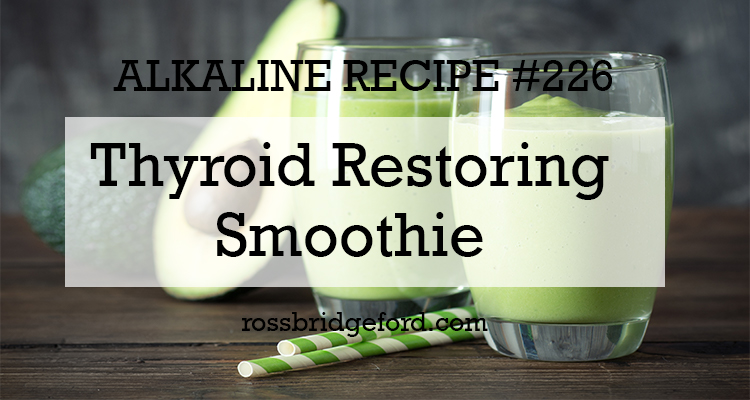
Nourish your thyroid
This fat-rich, high-alkaline smoothie is not only absolutely delicious (and quick to make), it’s packed with nutrients your thyroid relies on, including selenium, which contributes to normal thyroid function.
Note the need to soak the almonds if you don’t have a powerful blender such as a Vitamix or Nutribullet. If you forget to soak your nuts (yes, very funny) and don’t have a high-power blender, just leave the nuts out and have them as a snack after!
Why you’ll love it
- Vitamin K: nearly three days’ worth a glass.
- Vitamin E: about 80% of your daily needs.
- Selenium, which contributes to normal thyroid function.
- About 17 g fibre a glass.
Good for
Copper, vitamin C, folate and iron contribute to the normal function of the immune system.
Vitamin E, copper, manganese and riboflavin contribute to the protection of cells from oxidative stress. It also contains plant compounds with antioxidant activity, including lutein, beta-carotene and apigenin.
Magnesium, riboflavin, folate and pantothenic acid contribute to the reduction of tiredness and fatigue.
Vitamin K, manganese, magnesium and phosphorus contribute to the maintenance of normal bones.
Riboflavin, zinc and vitamin A contribute to the maintenance of normal vision. It also contains lutein and zeaxanthin, the carotenoids found in the macula of the eye.
Potassium contributes to the maintenance of normal blood pressure.
Tags use approved nutrient health-claim wording, for nutrients that give at least 10% of the Daily Value per glass. Plant compounds like lutein have no Daily Value, so we only say they’re there.
Key nutrients per glass
Contains: vitamin C (41%), folate (40%), pantothenic acid (36%), phosphorus (29%), niacin (28%), iron (26%), thiamin (25%), zinc (25%), vitamin B6 (24%), potassium (23%), calcium (18%), vitamin A (16%) and selenium (16%).
Plant compounds: lutein and zeaxanthin (about 3 mg), beta-carotene (about 1.7 mg), plant omega-3 ALA (about 2.3 g), chlorophyll, apigenin from the parsley and curcumin from the turmeric.
% of US Daily Value for adults, per glass (half the recipe). Estimated from USDA FoodData Central values for the ingredients as listed, so treat these as upper estimates. Uses typical values for unsweetened carton coconut milk and ground turmeric values for the fresh root; anything over 100% shows as 100%+.
Thyroid-Support Smoothie
Ingredients
Equipment
Method
- If you have a regular blender, soak the almonds for at least 6 hours first. With a high-powered blender like a Vitamix or Nutribullet you don’t need to.
- Blend all the ingredients together until totally smooth. That’s it!
- If you’re totally out of time, leave the nuts out and just eat them on the side. Enjoy!
Swaps
- Nut-free: use 3 tbsp hemp seeds instead of the almonds.
- No fresh turmeric? Use ¼ tsp ground.
- Thinner: add more water.
Storing it
Making it just for you? Keep the second serve in an airtight jar in the fridge and have it later the same day. It thickens as it sits, so add a splash of water.
Good to know
- High in vitamin K. If you take warfarin or another blood thinner, keep your greens intake steady and talk to your doctor before making green smoothies a daily habit.
- Thyroid condition? This is about good nutrition, not treatment. Keep following your doctor’s advice and taking any medication you’ve been prescribed.
- Thyroid medication: calcium in fortified plant milks can reduce how well it’s absorbed, so ask your pharmacist how far apart to keep them.
- Contains almonds – see Swaps for a nut-free version.
Try next
The Alkaline Life Club has everything in the Recipe Club, plus coaching, live Q&A and a community to keep you going.
See the Alkaline Life ClubSources
Nutrient values: USDA FoodData Central, SR Legacy (avocado 171705, coconut oil 171412, parsley 170416, turmeric 172231, baby spinach 168462, cucumber 168409, almonds 170567, chia seeds 170554). Plant compounds are named where the ingredient is a well-documented source; flavonoids follow the USDA Database for the Flavonoid Content of Selected Foods, Release 3.3. Daily Values: US Food and Drug Administration.