Ultimate Gluten-Free Bread
I absolutely adore this recipe. It’s a gluten-free bread that’s EASY (priority #1), tastes GREAT (priority #1.1) and the kids LOVE (priority #2).
Tastes: nutty, seedy and hearty – lovely toasted, with sweet or savoury toppings.
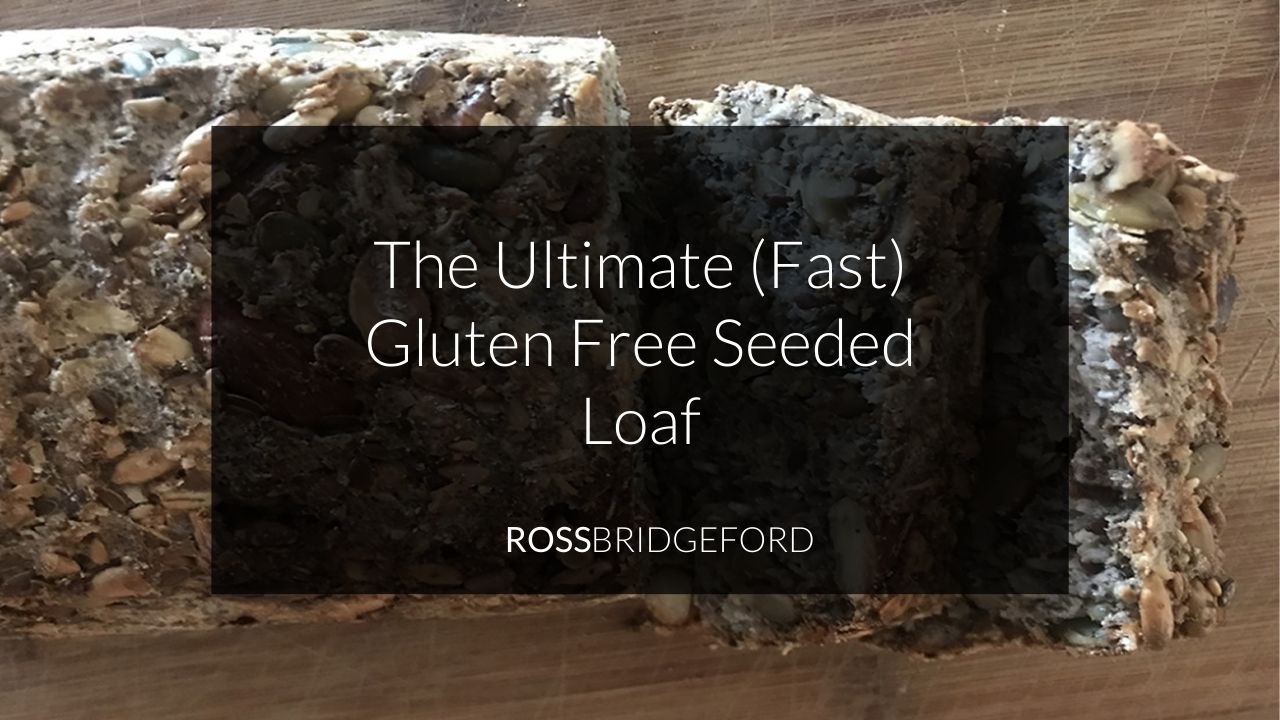
Close to perfection
I’ve adapted this from about four different gluten-free bread recipes over the years (my first ever was a pumpkin bread from 2006!) and I feel like this is close to perfection now.
It’s packed with healthy fats from the seeds, nuts, chia, almond butter and coconut oil, including anti-inflammatory omega-3s from the walnuts, flax and chia. The psyllium husks do the job of ‘glue’ like gluten in the loaf, and they’re a source of soluble and insoluble fibre to support your digestive health.
Why you’ll love it
- EASY. Mix, rest and bake. No kneading, and it won’t rise, so you can fill the tin right to the top.
- The kids LOVE it. A great answer to “I’m hungry, what can I eat…!!!”
- Healthy fats and fibre from the seeds, nuts, chia and psyllium in every slice.
Good for
Copper, selenium and zinc contribute to the normal function of the immune system.
Manganese, copper, vitamin E and selenium contribute to the protection of cells from oxidative stress. It also contains plant compounds with antioxidant activity, including rutin and lignans.
Magnesium and niacin contribute to the reduction of tiredness and fatigue.
Manganese, magnesium, phosphorus and zinc contribute to the maintenance of normal bones.
Zinc contributes to the maintenance of normal vision.
Tags use approved nutrient health-claim wording, for nutrients that give at least 10% of the Daily Value per slice. Plant compounds like these have no Daily Value, so we only say they’re there.
Key nutrients per slice
Contains: thiamin (19%), phosphorus (15%), selenium (15%), zinc (13%) and niacin (10%).
Plant compounds: plant omega-3 ALA (about 1.4 g), rutin from the buckwheat and lignans from the flaxseed.
% of US Daily Value for adults, per slice (1/12 of the loaf). Estimated from USDA FoodData Central values for the ingredients as listed; cooking reduces some vitamins, so treat these as upper estimates. Psyllium husk isn’t in the USDA data, so the fibre figure is an underestimate; anything over 100% shows as 100%+.
Ultimate Gluten-Free Bread
Ingredients
Equipment
Method
- In a large bowl, combine the dry ingredients (everything except the water, coconut oil and almond butter) and mix well together with your hands.
- In a separate bowl, mix together the almond butter and coconut oil until combined, then pour in the water, stirring until it’s mixed. It doesn’t need to be completely combined; a few little lumps of the butter are OK.
- Pour the wet stuff in with the dry stuff and get your hands in there, combining it all until it’s a really thick, gooey, dough-y mix. Let it stand for at least an hour, preferably 2–3 hours, on your kitchen bench. If you’re leaving it for a while, cover it with a kitchen towel – you can’t leave it too long.
- When you’re ready to cook, preheat your oven to 175°C / 350°F and transfer the mixture into a loaf tin. It won’t rise, so feel free to fill it right to the top.
- Bake in the middle of the oven for around 20 minutes. Then remove it from the tin, flip it upside down and bake for another 20 minutes.
- After 40 minutes in total, remove it from the oven and let it cool completely before slicing.
Notes
Swaps
- Any nuts and seeds work, to a total of 1¼ cups.
- Coconut flour works instead of buckwheat flour.
- Nut-free? Use seeds only, and swap the almond butter for tahini.
Storing it
It will last around 5–6 days in the fridge in an airtight container. It also freezes well in slices – toast them straight from frozen.
Good to know
- Oats and gluten: choose certified gluten-free oats if you’re coeliac or very gluten-sensitive.
- Contains nuts. Use seeds only if you need it nut-free.
- Psyllium: drink plenty of water with high-fibre foods like this.
Ross’s tip
A trick I learned from My New Roots: after 20 minutes, remove the loaf from the tin and flip it upside down before baking for another 20 minutes.
Try next
The Alkaline Life Club has everything in the Recipe Club, plus coaching, live Q&A and a community to keep you going.
See the Alkaline Life ClubSources
Nutrient values: USDA FoodData Central, SR Legacy (sunflower seeds 170562, pumpkin seeds 170556, walnuts 170187, almonds 170567, oats 173904, flaxseed 169414, buckwheat flour 170687, chia seeds 170554, coconut oil 171412, almond butter 168588, desiccated coconut 170170). Plant compounds are named where the ingredient is a well-documented source; flavonoids follow the USDA Database for the Flavonoid Content of Selected Foods, Release 3.3. Daily Values: US Food and Drug Administration.