Spinach with Toasted Almonds
A delicious, quick stir-fry that gives you a real vitamin boost – with golden almonds for crunch.
Tastes: warm and gently spiced, with curry and coriander, silky spinach and crunchy golden almonds.
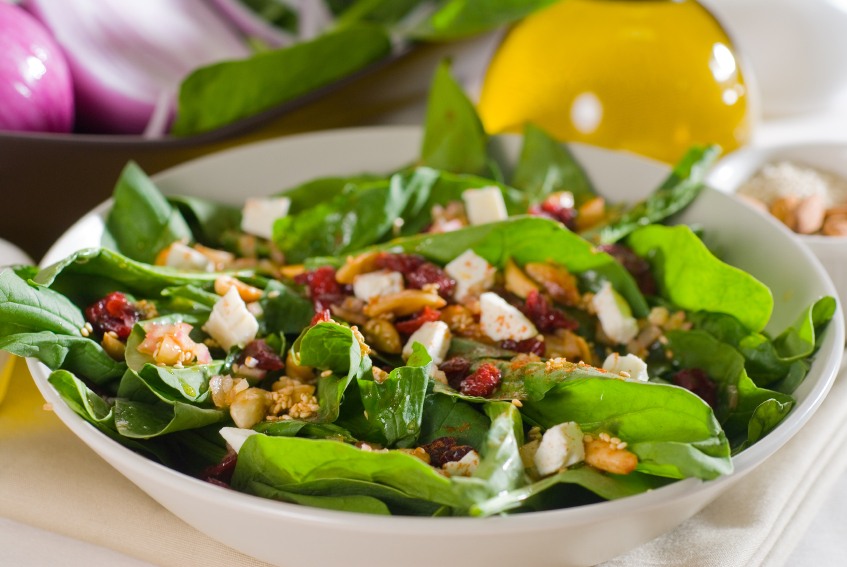
A real alkaline superfood
Spinach is a real alkaline superfood: highly nutritious, extremely rich in antioxidants and a rich source of vitamins A, C, E and K, magnesium, iron and folate, just to name a few – the list could go on and on!
The almonds give it a crunchy texture and make this dish a real treat.
Why you’ll love it
- About 18 g protein and 14 g fibre a serve.
- Vitamin E: more than a full day’s worth, from the almonds and spinach.
- Magnesium and iron: over three-quarters and over half your daily needs.
- Folate: about one and a half day’s worth.
Good for
Vitamin A, folate, vitamin C and copper contribute to the normal function of the immune system.
Manganese, vitamin E, vitamin C and copper contribute to the protection of cells from oxidative stress. It also contains plant compounds with antioxidant activity, including lutein, beta-carotene and lycopene.
Folate, magnesium, riboflavin and iron contribute to the reduction of tiredness and fatigue.
Protein contributes to the maintenance of muscle mass, and magnesium, potassium and calcium contribute to normal muscle function.
Vitamin K, manganese, magnesium and calcium contribute to the maintenance of normal bones.
Vitamin A, riboflavin and zinc contribute to the maintenance of normal vision. It also contains lutein and zeaxanthin, the carotenoids found in the macula of the eye.
Potassium contributes to the maintenance of normal blood pressure.
Tags use approved nutrient health-claim wording, for nutrients that give at least 10% of the Daily Value per serve. Plant compounds like lutein have no Daily Value, so we only say they’re there.
Key nutrients per serve
Contains: copper (100%), magnesium (86%), riboflavin (77%), iron (57%), vitamin B6 (47%), potassium (47%), thiamin (33%), calcium (33%), phosphorus (30%), zinc (28%), niacin (26%), pantothenic acid (10%) and selenium (10%).
Plant compounds: lutein and zeaxanthin (about 37 mg), beta-carotene (about 17 mg), lycopene (about 1.6 mg), plant omega-3 ALA (about 1.7 g), chlorophyll, quercetin from the onion, sulphur compounds from the garlic and capsaicin from the chilli.
% of US Daily Value for adults, per serve (half the recipe). Estimated from USDA FoodData Central values for the ingredients as listed; cooking reduces some vitamins, so treat these as upper estimates. Uses 2 tbsp canola oil; excludes salt; anything over 100% shows as 100%+.
Spinach with Toasted Almonds
Ingredients
Equipment
Method
- Wash the spinach and tear into single leaves. Peel and chop the onion and garlic, and dice the tomato.
- Heat the oil in a wok or deep frying pan and roast the almonds (and the crumbled chilli, if using), stirring, until golden brown. Lift them out onto kitchen paper.
- Gently fry the onion and garlic until they start to soften. Add the tomato, curry powder and coriander and stir-fry for about 2 minutes.
- Add the spinach and stir-fry for another 2–3 minutes.
- Season with salt and stir in the roasted almonds. Add the chilli crumbles if you like it spicier.
Notes
Swaps
- Serve it with brown rice or quinoa for a heartier meal.
- Nut-free: use pumpkin seeds instead of almonds.
- Frozen spinach: use 500 g, thawed and squeezed.
Storing it
Best fresh. Leftovers keep in the fridge for 1–2 days; keep the almonds separate so they stay crunchy.
Good to know
- High in vitamin K. If you take warfarin or another blood thinner, keep your greens intake steady and talk to your doctor before eating more leafy greens than usual.
- Contains almonds. See Swaps for nut-free.
Try next
The Alkaline Life Club has everything in the Recipe Club, plus coaching, live Q&A and a community to keep you going.
See the Alkaline Life ClubSources
Nutrient values: USDA FoodData Central, SR Legacy (spinach 168462, onion 170000, garlic 169230, tomatoes 170457, canola oil 172336, almonds 170567, curry powder 170924, coriander seed 170922). Plant compounds are named where the ingredient is a well-documented source; flavonoids follow the USDA Database for the Flavonoid Content of Selected Foods, Release 3.3. Daily Values: US Food and Drug Administration.