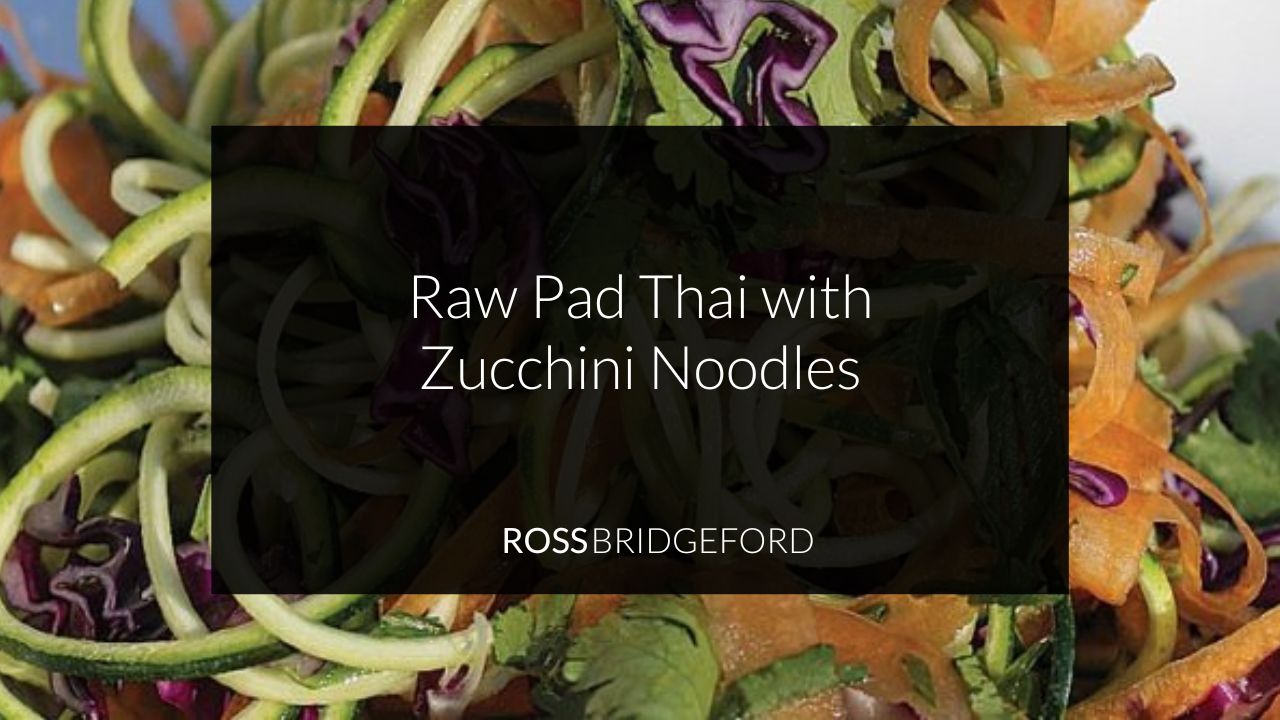
Raw Pad Thai with Zucchini Noodles
Simple, nutrient-dense, and it takes one of my previously favourite ‘unhealthy’ recipes – pad thai – and makes it alkaline.
Tastes: crunchy and fresh, with a rich, savoury tahini and almond butter sauce, lime and ginger.
A crowd-pleaser
I love this recipe for its simplicity and nutrient density. It’s pretty much entirely raw, it’s delicious and vegan, and it’s very readily accepted by non-alkalisers if you want to serve it to your family and friends!
Why you’ll love it
- Pretty much entirely raw, crunchy, colourful and fresh.
- Vitamins A and C: more than a full day’s worth of each.
- About 22 g plant protein from the tahini, almond butter and sprouts.
- Family-friendly. Even the non-alkalisers love it.
Good for
Vitamin C, copper, vitamin A and vitamin B6 contribute to the normal function of the immune system.
Vitamin C, copper, manganese and riboflavin contribute to the protection of cells from oxidative stress. It also contains plant compounds with antioxidant activity, including lutein, beta-carotene and quercetin.
Riboflavin, vitamin B6, folate and magnesium contribute to the reduction of tiredness and fatigue.
Protein contributes to the maintenance of muscle mass, and magnesium, potassium and calcium contribute to normal muscle function.
Vitamin K, manganese, magnesium and phosphorus contribute to the maintenance of normal bones.
Vitamin A, riboflavin and zinc contribute to the maintenance of normal vision. It also contains lutein and zeaxanthin, the carotenoids found in the macula of the eye.
Potassium contributes to the maintenance of normal blood pressure.
Tags use approved nutrient health-claim wording, for nutrients that give at least 10% of the Daily Value per serve. Plant compounds like lutein have no Daily Value, so we only say they’re there.
Key nutrients per serve
Contains: thiamin (67%), vitamin E (63%), vitamin B6 (59%), folate (58%), magnesium (54%), phosphorus (52%), niacin (43%), potassium (43%), zinc (39%), pantothenic acid (36%), iron (32%), selenium (24%) and calcium (23%).
Plant compounds: lutein and zeaxanthin (about 7.1 mg), beta-carotene (about 10 mg), chlorophyll, quercetin from the onion, glucosinolates from the cauliflower and cabbage, anthocyanins from the cabbage, gingerols from the ginger, sulphur compounds from the garlic and citrus flavonoids from the lime.
% of US Daily Value for adults, per serve (half the recipe). Estimated from USDA FoodData Central values for the ingredients as listed, so treat these as upper estimates. Coconut sugar uses USDA sugar values; anything over 100% shows as 100%+.
Raw Pad Thai with Zucchini Noodles
Ingredients
Equipment
Method
- Make the carrot and zucchini ‘noodles’ with a spiraliser or mandoline. No spiraliser? Use a vegetable peeler to make long slices, then cut them into very thin strips with a sharp knife.
- Put them in a large bowl with the spring onions, cabbage, beansprouts, cauliflower and coriander.
- For the sauce, blend the tahini, almond butter, tamari, coconut sugar, lime juice, garlic and ginger. Add a little water if needed – it’s a very thick sauce.
- Mix the sauce into the bowl until everything is evenly coated.
- Serve with a sprig of coriander and an extra squeeze of lime or lemon.
Swaps
- Saltier? Add more tamari to taste – it’s easy to add, hard to take away.
- Nut-free: use extra tahini instead of the almond butter.
- Crunch: top with a few chopped cashews or sesame seeds.
Storing it
Best fresh. The sauce keeps in a jar in the fridge for up to a week.
Good to know
- High in vitamin K. If you take warfarin or another blood thinner, keep your greens intake steady and talk to your doctor before eating more leafy greens than usual.
- Tamari: choose one labelled gluten-free if you’re coeliac.
- Contains almonds and sesame. See Swaps for a nut-free sauce.
Try next
The Alkaline Life Club has everything in the Recipe Club, plus coaching, live Q&A and a community to keep you going.
See the Alkaline Life ClubSources
Nutrient values: USDA FoodData Central, SR Legacy (zucchini 169291, carrot 170393, spring onions 170005, red cabbage 169977, bean sprouts 169957, cauliflower 169986, coriander leaves 169997, tahini 168604, almond butter 168588, tamari 174278, sugar (for coconut sugar) 169655, lime juice 168156, garlic 169230, ginger 169231). Plant compounds are named where the ingredient is a well-documented source; flavonoids follow the USDA Database for the Flavonoid Content of Selected Foods, Release 3.3. Daily Values: US Food and Drug Administration.